
SETTING THE SCENE
Tuvalu had been on my Final50 list for quite some time, mostly because it is one of the smallest, most remote, and least visited countries in the world. The country is home to around 11,000 people and has a total land area of only about 26 square kilometers!
Getting there wasn't easy. With only a handful of flights each week from Fiji, I had to carefully coordinate my itinerary. And because of my limited time, I would have just 24 hours on Funafuti before catching my next flight.
Now, you might think 24 hours is nowhere near enough time to see an entire country. And you're right! But with the limited transportation options, staying any longer could have meant spending almost an entire week waiting for the next available flight. So I decided to make the most of the time I had, exploring the island by bicycle, interacting with locals, and learning about the country's environmental challenges.
What I didn't anticipate was how dramatically my travel plans would unravel before I even left the island!
TRIP PREP
FLIGHTS: Tuvalu is one of the more challenging countries to reach in the South Pacific. During my visit, international flights operated from Fiji to Funafuti on a limited schedule. I flew in from Nadi, and because I had only 24 hours on the island, I had to hope that nothing would be delayed or canceled. As you'll see, flight disruptions eventually caused major problems for the remainder of my Pacific itinerary.
VISA: During my visit, American travelers could generally enter Tuvalu for a short tourist stay without arranging a visa in advance. However, entry requirements can change, so make sure to confirm the latest rules before traveling.
ACCOMMODATIONS: There are only a handful of places to stay on Funafuti. I chose Filamona because it was reasonably priced, centrally located, and had good reviews. And when I say centrally located, I mean literally next to the airport runway! The room was relatively clean, the internet worked well, and the staff were helpful.
GETTING AROUND: The main island is narrow and relatively flat, making it ideal for exploring by bicycle. I rented one for about $10 a day from a local guesthouse. You can also rent scooters, but given my history of accidents on those things, I decided not to take any chances. A bicycle was more than enough to explore the main island.
MONEY & FOOD: Tuvalu uses the Australian dollar. Bring enough cash because banking and payment options are limited, and not every business accepts international cards. Much of the food and other goods are imported, which can make prices surprisingly high for such a small country.
COMMUNICATIONS: My international phone plan didn't work in Tuvalu, which was frustrating. However, I was surprised to find that several businesses and households were using Starlink satellite internet, including my accommodation. The connection was remarkably fast given how remote the island was.
JOURNEY JOURNAL
Arriving in Funafuti: My first surprise in Tuvalu was when we arrived at the airport. After landing, I stepped out onto the runway and realized just how unusual this airport was. Rather than being situated far outside the city, the runway runs directly through the main populated area. Homes, businesses, and government buildings are all within walking distance.
In fact, when I looked around, I could almost see my hotel from where the plane had landed! And when I needed to exchange money, I simply walked across the airport grounds to the National Bank of Tuvalu on the other side!
Exploring Funafuti: Given the limited time I had, I wanted to explore as much of the main island as possible. But with temperatures soaring and the humidity making everything feel even hotter, I knew that walking several miles to the northern end of the island would leave me completely exhausted. So I decided to rent a bicycle.
As I pedaled north, I began to get a better sense of daily life in Tuvalu. The main road runs along a narrow strip of land, with houses and small businesses on either side. In some places, you can almost see the ocean and lagoon at the same time.
One of the things that immediately stood out was how simple many of the homes were. Some appeared to be constructed from a mixture of corrugated iron, cement blocks, wood, and other available materials. Given how exposed the island is to storms, I wondered how these structures would withstand severe weather.
As I continued cycling, I noticed another major challenge facing Tuvalu: access to fresh water. The country has very limited natural freshwater resources. Many households depend on harvesting rainwater, while desalination provides another source of supply, although it can be expensive.
Much of the food consumed in Tuvalu is also imported because the limited land area and difficult growing conditions make it challenging to grow enough food locally. Combine that with the costs of transportation, waste management, and maintaining infrastructure, and you begin to appreciate the logistical challenges of sustaining a country in such a remote location.
Running Into an Old Friend: As I approached the northern end of Funafuti, I decided to get off the bicycle and explore the coastline on foot. And then something absolutely crazy happened.
I was walking along a relatively deserted stretch of beach when I suddenly recognized someone sitting nearby. It was Oscar, an Australian traveler I had met only a few days earlier while diving in the Solomon Islands!
I couldn't believe it. Here we were, thousands of miles from home, on one of the most remote islands in the Pacific, and somehow we had managed to cross paths again. Crazy!!
Internet and Climate Change: One of the more unexpected things I encountered was the use of Starlink satellite internet. Speaking of internet, Tuvalu has another random connection to the digital world. Its country-code domain is ".tv," which has become commercially valuable because television companies, streaming services, and other media businesses like using those two letters. The government earns revenue from licensing the domain, which is an interesting way for such a small country to generate income.
As I made my way back toward the center of Funafuti, I noticed what looked like large sandbags and other barriers positioned along parts of the shoreline. From what I could tell, these structures were designed to help protect the land against flooding and erosion. I also came across areas where sand and other materials had been used to reclaim land from the lagoon, creating additional space for roads, infrastructure, and other facilities.
Seeing all of this firsthand really showed me how vulnerable the country and its people are to rising seas and extreme weather events.
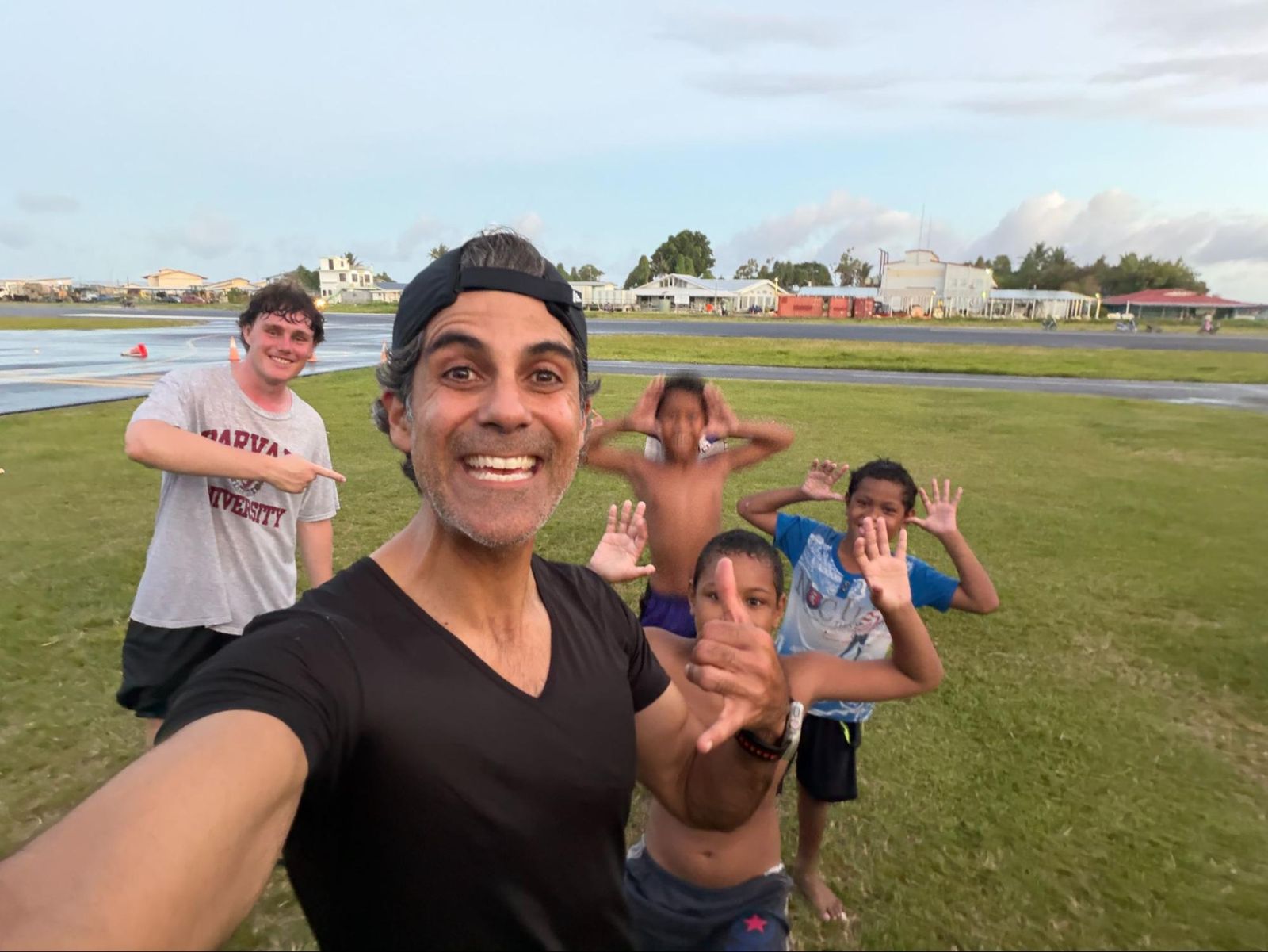
Running on the Airport Runway: One of the things I always try to do when visiting a new country is go for a run. And Tuvalu offered one of the most unusual running locations I've ever experienced. The airport runway!
When planes aren't arriving or departing, the runway becomes a major gathering place for the local community. People come out to walk, run, play football, rugby, and simply socialize.
So that evening, I joined them and went for a run along the tarmac. It was such a cool experience. There were children running around, groups playing sports, and families enjoying the evening. The whole place had an atmosphere that was completely different from any airport I'd ever visited.
Evening Prayers: Then at around 6:45 p.m., something crazy happened. I noticed that the entire community seemed to come to a grinding halt. Cars stopped moving, people stopped talking, and everyone appeared to observe a period of silence.
I learned that this was a community prayer observance, reflecting the important role Christianity plays in Tuvaluan society. And for the next 15 minutes, the island became incredibly quiet.
Then, almost as suddenly as it had begun, everything came back to life!
Travel Plans Cratered: Just as I was settling in for the evening and getting ready to catch up on some work, I received an email from Nauru Airlines. And just like that, the rest of my South Pacific itinerary unraveled.
I had planned to continue to Nauru and Kiribati after Tuvalu, hoping to complete several more Final50 countries on the same journey. Given how difficult and expensive it is to reach this part of the world, I had carefully coordinated the flights to maximize my time.
But the airline had changed its schedule, and suddenly the connections I needed were no longer possible. I spent hours contacting the airline and trying to find an alternative route, but to no avail. I would spend the next few days in Fiji before returning to the U.S.
So looks like I'll be coming back to the South Pacific, inshallah!
AFTERWORD
My visit to Tuvalu was short and sweet, but it was also one of the more thought-provoking experiences I've had during my Final50 journey.
The challenges the people face seem almost insurmountable, from freshwater shortages and waste management to the costs of importing goods and the threat of rising seas.
And while I was disappointed that my plans to visit Nauru and Kiribati fell apart, I was still grateful to have experienced Tuvalu, even if only for 24 hours.
TRAVEL HACKS
AIRPORT RUNWAY: When flights aren't operating, the runway becomes a public gathering space. It's a unique place to experience local life, but always follow airport restrictions and local instructions.
WEATHER & CLIMATE: Tuvalu is extremely low-lying and vulnerable to flooding and severe storms. Monitor local weather conditions and avoid traveling during periods of major disruption.
EXTRA TIME: If you have a longer stay, consider exploring other parts of Funafuti Atoll or arranging a visit to the surrounding islets. My 24-hour itinerary gave me only a brief introduction to the country.
Stay Curious. And I look forward to seeing you on my next Final50 journey!
Travel Note: The information in this blog reflects my experience at the time of travel. Visa requirements, transportation, costs, and other travel conditions may change, so always verify the latest information before planning your trip.