
SETTING THE SCENE
São Tomé had been on my radar for years. Located in the Atlantic Ocean off the western coast of Africa, this small island country was said to have incredible natural beauty, delicious food, a fascinating colonial history, and some of the friendliest people on the continent.
And after finally making the trip, I can say that it delivered all of that and much more! I had some of my best meals of the year, stayed in a few of the most unique accommodations I've experienced in a long time, explored old coffee and cocoa plantations, and drove through landscapes that looked like something out of Jurassic Park.
But I also got myself into a few scary situations, including driving down some of the worst roads I've encountered during my travels. The country consists of two main islands, São Tomé and Príncipe, and I knew I wouldn't have enough time to explore both properly. So I decided to focus on the larger island of São Tomé, rent a car, and drive around as much of it as possible.
I was hoping for an adventure, and that's exactly what I got!
TRIP PREP
FLIGHTS: I flew directly into São Tomé from Libreville, Gabon. Other connections include flights through Portugal and several African destinations, with airlines such as TAP and ASKY serving the country. My onward flight to Angola with TAAG was canceled, which ended up disrupting the remainder of my itinerary. And let me tell you, that ticket wasn't cheap. It was one of the most expensive one-way flights I'd purchased for such a short distance! Flight schedules can be limited, so I strongly recommend giving yourself some flexibility.
VISA: As an American citizen, I was able to enter São Tomé without arranging a visa in advance for my short visit. Check the latest requirements before traveling, especially if you're planning a longer stay. Entry rules and permitted lengths of stay can change, so don't assume my experience reflects the current requirements.
ACCOMMODATIONS: This was one of the highlights of my trip. Rather than staying in one hotel, I moved around the island and experienced several very different places. I initially stayed in São Tomé city, but the hotel was noisy and not particularly impressive. If your budget allows, consider the Omali Hotel, which is a more established option near the airport. I then stayed at Roça São João dos Angolares, a beautifully restored plantation property in the south, followed by Hotel Gombela, an eco-lodge overlooking the ocean. I also visited Mucumbli on the western coast, which looked like a great option for families. My final stay was at a property surrounded by lush gardens west of the capital. I would strongly recommend trying different accommodations rather than limiting yourself to São Tomé city.
GETTING AROUND: I rented a Suzuki Jimny and drove myself around the island. Now, I love having the freedom to explore independently, but the roads in São Tomé were a real mess. Some sections were full of potholes, others were muddy, and a few were barely passable. At one point, I even backed into a ditch and needed help from locals to get out! If you're not comfortable driving in these conditions, I would recommend hiring a driver. Travel times can be much longer than expected, especially if you're heading toward the southern part of the island.
MONEY & FOOD: The local currency is the dobra, and cash is important, especially outside the capital. The food was fantastic, with a mixture of Portuguese influences and fresh local ingredients. I tried some excellent fish, chicken, lamb, coffee, and other dishes made with produce grown right on the island. Honestly, food was one of the best parts of the trip. I also enjoyed how many guesthouses and restaurants incorporated ingredients from their own gardens.
TRIP PLANNING: I spent around four to five days exploring the main island. Ideally, I would recommend at least a week if you want to visit both São Tomé and Príncipe. The distances on the map may look short, but road conditions and the number of interesting stops can make travel much slower than expected. If you have limited time, I would focus on the south and west of São Tomé rather than trying to rush through both islands.
JOURNEY JOURNAL
Exploring São Tomé City: I started my trip in São Tomé, the capital, which sits right along the coast. My first impressions were mixed. The city has some beautiful old colonial buildings, but many are in poor condition, with peeling paint, faded facades, and signs of years of neglect. At the same time, there was something interesting about walking through the streets and seeing how the old architecture blended with everyday life.
São Tomé was a Portuguese colony for centuries and became independent in 1975. The country's economy was historically centered on plantations, especially cocoa and coffee, and you can still see evidence of that period throughout the island. At one point, São Tomé was among the world's largest cocoa producers, which earned it a reputation as one of the Chocolate Islands.
But after independence, many plantations struggled or were abandoned, and the economy went through significant changes. You can still see the consequences today in the large colonial properties scattered across the countryside, some restored and others slowly falling apart.
Rather than spend too much time in the capital, I wanted to explore the countryside and see some of these old plantations for myself. So I picked up my rental car and headed inland.
Monte Café and the Coffee Plantations: My first major stop was Monte Café, a historic coffee plantation in the mountainous interior of São Tomé. The drive took me through beautiful green countryside, with thick vegetation, small villages, and winding roads climbing into the hills.
When I arrived at Monte Café, I was surprised to discover that parts of the old coffee-processing operation were still being used. I walked through the facilities and learned how the beans were dried, roasted, and prepared using equipment and methods that had been around for generations. Some of the machinery looked like it belonged in the nineteenth century!
I love coffee, so naturally I had to try some. And between the caffeine and the sugarcane I sampled during the visit, I was absolutely wired! It was also interesting to learn about the different stages of coffee production, from harvesting the beans to drying and roasting them.
But what fascinated me most was seeing how much of the country's history was connected to these plantations. The buildings, equipment, and agricultural practices were remnants of a period when the island was a major exporter of coffee and cocoa. It was one thing to read about that history, but another to walk through the facilities and see how much of it remained.
Exploring Roça Água-Izé: As I continued driving south, I decided to stop at Roça Água-Izé, one of the island's large former plantations. Now, I've visited many historical plantations and colonial properties around the world, but this one was different.
Much of the old complex was in poor condition. Buildings that had once been part of a major agricultural operation were now home to local families, and the contrast between the plantation's past and present was striking. At one point, the property had included extensive processing facilities and even a hospital, but much of that infrastructure had fallen into disrepair.
When I arrived, several people approached me offering to show me around. I wasn't really interested in hiring a guide, so I decided to explore on my own. But as I made my way toward the main plantation buildings, something unexpected happened.
A group of local kids came running up to me, excited to show me around their neighborhood. They weren't trying to sell me anything. They just wanted to share their world with a visitor. And honestly, how could I say no?
We walked through the old buildings, explored different rooms, and visited some of the areas where families had created homes within the former plantation. The kids showed me fruits and herbs growing in their families' gardens and were eager to explain what everything was.
I had such a great time with them. We didn't speak the same language, and at times I had no idea what they were trying to tell me, but that didn't seem to matter. They were excited to have someone visiting, and I was excited to learn about their lives and see the place through their eyes.
What started as a simple stop at an old plantation became one of the most memorable experiences of the entire trip. It was so innocent, and I loved how much we were able to communicate without really understanding each other's words. This was one of those moments that reminded me exactly why I love to travel.
Staying at Roça São João: That evening, I arrived at Roça São João dos Angolares, another former plantation that had been transformed into a beautiful guesthouse and restaurant. And what a place!
After seeing so many old plantation buildings falling apart, I was impressed by how thoughtfully this property had been restored. The rooms, furniture, artwork, and surrounding gardens all reflected the history of the estate while creating a comfortable and welcoming place to stay. It really felt like stepping into a different era.
I later learned that the owners had backgrounds in art and cooking, which explained a lot about the attention to detail. The food was another highlight. Much of it was prepared with ingredients grown in the gardens, and the combination of local produce and Portuguese culinary influences was excellent.
I also had a chance to meet Ivan, the owners' son, who spoke with me about the property and the family's vision for preserving the plantation while creating something new. I really appreciated what they had accomplished. Rather than simply allowing the property to deteriorate, they had created a place where visitors could experience an important part of São Tomé's history in a completely different way.
The hospitality, food, and atmosphere made this one of my favorite accommodations of the entire trip. I wish I could have stayed longer.
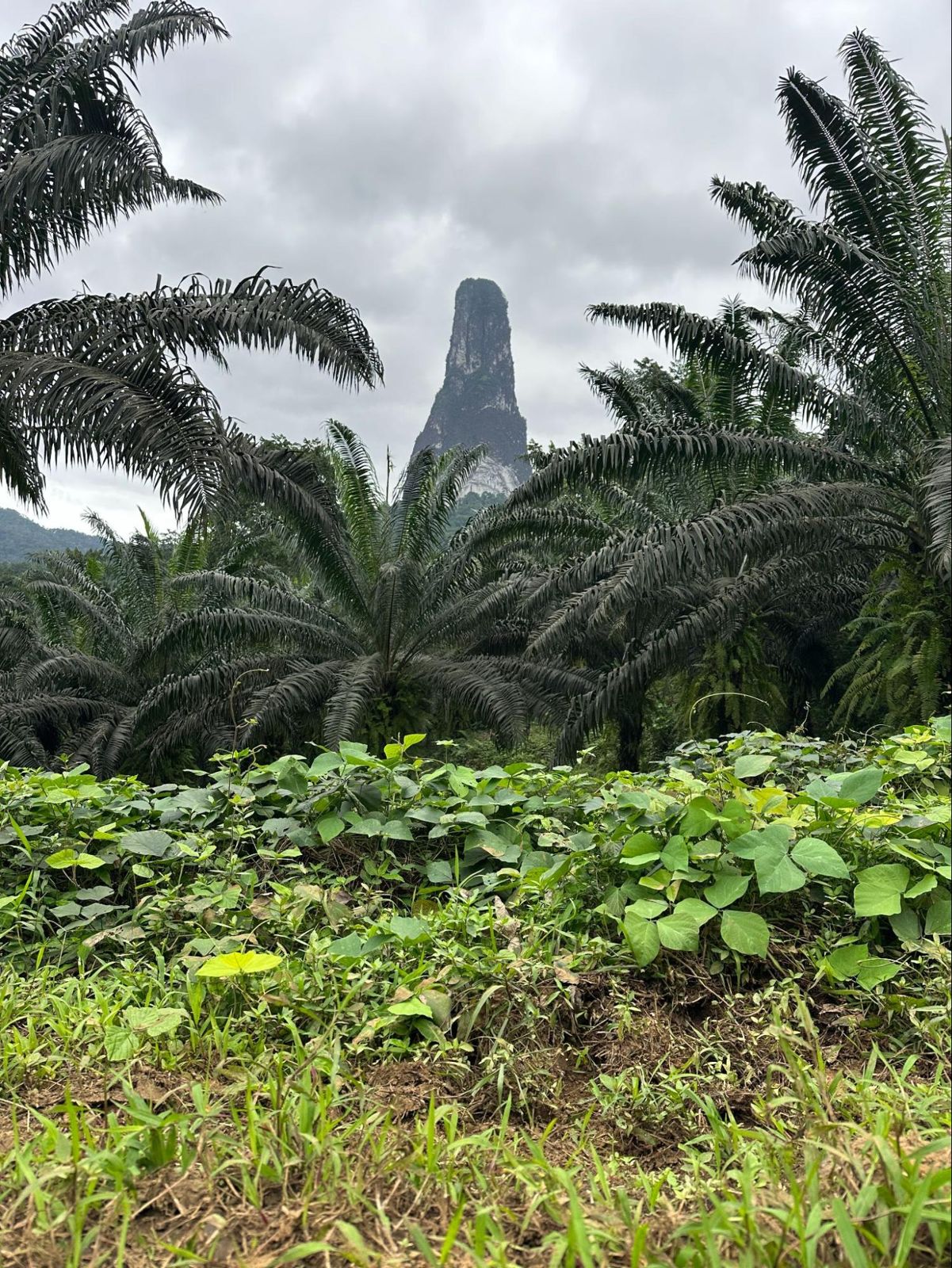
Pico Cão Grande and the Palm Plantations: One of the places I was most excited to see was Pico Cão Grande, the enormous volcanic rock formation that rises dramatically from the forests of southern São Tomé. I had seen photos of it before arriving, and for whatever reason, I was determined to get as close as possible.
As I drove south, I could see the mountain appearing through the vegetation. It looked absolutely surreal, almost like something out of Jurassic Park. The enormous volcanic formation towered over the surrounding forest, and I could understand why it was one of the most photographed natural landmarks in the country.
But getting closer was another matter. I discovered that I would need to drive through a large palm oil plantation, using narrow dirt tracks that were in pretty rough condition. Now, if you've watched some of my earlier vlogs, you know that I don't always have the best luck driving off-road in foreign countries.
And São Tomé was no exception! As I navigated through the plantation, the tracks became muddier and more difficult to follow. At one point, while trying to maneuver the car, I backed into a ditch. I was stuck, and for a moment I wasn't sure how I was going to get out. Thankfully, some locals came over and helped push the vehicle back onto the road. Not exactly the adventure I had planned, but at least I got out without causing any major damage!
After continuing through the palm groves, I finally found myself much closer to Pico Cão Grande. And I have to say, it was worth all the trouble. The volcanic formation rose almost vertically above the surrounding forest, with clouds moving around its upper slopes.
I spent some time simply looking at it and taking in the surroundings. There was almost no one else around, and the whole experience felt incredibly peaceful. Despite the challenges of getting there, it was one of the highlights of my entire trip.
Heading to the Southern Coast: After leaving the palm plantations, I continued south toward Porto Alegre, a small coastal community near the southern end of the main island. I had a rough plan to visit Ilhéu das Rolas, a small island just offshore that is famous for being crossed by the equator.
But I hadn't arranged a boat or guide in advance, so I wasn't sure whether I would actually make it there. Thankfully, I arrived with enough daylight left to find a local fisherman willing to take me across. I tried negotiating the price, but he wasn't interested in bargaining!
So I agreed, boarded the boat, and headed out toward the island. The boat ride was beautiful, with clear water, green coastline, and several secluded beaches along the way. I was glad I had decided to go for it, even though I had made the arrangements at the last minute.
Ilhéu das Rolas and the Equator: When we arrived at Ilhéu das Rolas, I made my way to the monument marking the equator. I had stood on the equator before, including during a trip to Uganda, but there was something different about doing it on a tiny island in the middle of the Atlantic Ocean.
We also explored the coastline and made our way toward a beautiful beach on the other side of the island. The scenery was incredible, although the water was too rough for swimming. I was disappointed that I couldn't get into the ocean, but visually the place was stunning.
I was just happy to have made the trip, especially since I had organized the whole excursion at the last minute. We eventually returned to the mainland, and I started making my way toward my accommodations for the night.
But getting there was another story. The roads were terrible, it was getting dark, and at several points I thought I was going to get completely lost. I eventually made it to Hotel Gombela and was more than ready to call it a night.
When I woke up the following morning and saw the surrounding landscape in daylight, I couldn't believe how beautiful it was. Sometimes you have to go through hell just to get to heaven!
A Moment in Time: During my travels around the island, I had one experience that really stuck with me. I had decided to walk through some thick vegetation to reach a small, secluded beach off the main road.
When I finally reached the water, everything seemed to come together. The temperature was perfect, the sun was beginning to set, and there was hardly anyone around. I sat there for a long time, looking out at the little bay and simply enjoying the silence.
I sometimes call these experiences A Moment in Time, or AMIT. It's that moment when everything around you feels just right and you know you'll remember it for years to come. São Tomé gave me one of those moments, and it's a memory I know I'll return to whenever I need a little peace and quiet.
Visiting the National Museum: After spending several days exploring the southern part of São Tomé, I began making my way back toward the capital. I had spent so much time enjoying nature that I wanted to learn more about the country's history before leaving.
So I stopped at the National Museum, housed in an old Portuguese fortress near the waterfront. The museum provided an interesting overview of the colonial period, plantation economy, and eventual independence of São Tomé and Príncipe.
I was glad I made the visit because it helped connect many of the places I had been exploring over the previous days. Those enormous plantations, old buildings, and communities living within them made much more sense once I understood more about the country's history.
Given my interest in history, I always try to make time for a museum, and this visit was definitely worthwhile.
Exploring the Western Coast: For the final part of my trip, I decided to explore the northern and western parts of the island. The scenery continued to surprise me. There were mountains, forests, small villages, and beautiful stretches of coastline.
Along the way, I passed through a famous tunnel carved into the hillside and stopped at several places to appreciate the views. I also visited an eco-lodge called Mucumbli, which I thought would be a great option for families or travelers looking for a comfortable place to stay surrounded by nature.
But my final accommodation was something else entirely. I had found a property west of the capital that was almost completely hidden among gardens, flowers, and fruit trees. The owner had created several unique accommodations within the grounds, and the entire place felt like a little sanctuary.
I spent some time talking with him about how he had developed the property, and I was impressed by the amount of work and creativity that had gone into creating it. It was one of those places where you could tell the owner had invested years of effort into making something unique.
The hospitality was incredible, and I couldn't have asked for a better way to end my journey around the island. Well, almost.
My flight out of São Tomé was canceled, which meant I had to spend an unexpected additional night near the airport before finally continuing my trip. Not exactly the ending I had hoped for, but after everything I'd experienced, I couldn't complain too much.
AFTERWORD
São Tomé was one of the biggest surprises of my travels that year. I had heard about its incredible nature, but I wasn't prepared for just how diverse the landscape would be, from coffee plantations and enormous volcanic formations to beautiful beaches and thick tropical forests.
I also loved the food, the unique accommodations, and the opportunity to learn about the country's history through its former plantations. But the experiences that stood out most were the human interactions, especially meeting the kids at Roça Água-Izé and the people who had created new lives and businesses within historic properties.
And of course, I'll never forget getting stuck in the palm plantation while trying to get closer to Pico Cão Grande! There is still so much I would love to see, especially Príncipe, which I wasn't able to visit this time.
Obrigado, São Tomé. I'll definitely be back.
TRAVEL TIPS
PLANTATIONS: Visit at least one historic roça. Monte Café, Água-Izé, and Roça São João offered very different experiences. If you're interested in coffee production, Monte Café is worth adding to your itinerary.
PICO CÃO GRANDE: You can appreciate the volcanic formation from several viewpoints without driving deep into the palm plantations. If you plan to get closer, ask locals about road conditions and access. Don't attempt to climb it casually. It's a serious undertaking that requires specialized equipment, experience, and planning.
ILHÉU DAS ROLAS: Arrange your boat excursion in advance if possible, and confirm the sea conditions before leaving Porto Alegre. My last-minute arrangements worked out, but I wouldn't count on that happening every time.
PRÍNCIPE: If you have a week or more, consider adding Príncipe to your itinerary. A possible approach is four days exploring São Tomé and three days on Príncipe, depending on your interests and the available transportation.
Stay Curious. And I look forward to seeing you on my next Final50 journey!
Travel Note: The information in this blog reflects my experience at the time of travel. Visa requirements, transportation, costs, and other travel conditions may change, so always verify the latest information before planning your trip.