
SETTING THE SCENE
Papua New Guinea had been on my radar for years. It's one of the most linguistically, culturally, and ecologically diverse countries in the world, with hundreds of islands, remote highlands, and communities that have kept their traditions alive for generations. But I also knew it wasn't an easy place to visit. Getting around is difficult, there are few roads connecting the main cities, and I had heard many warnings about safety in the capital.
Then an opportunity came up. I was in Melbourne competing in a half Ironman, and since I was already in that part of the world, I thought, why not make the journey north and make Papua New Guinea my 158th country?
I only had a few days, so I tried to be realistic. Instead of hopping between islands, I decided to stay in and around Port Moresby and get a good taste of the country's culture, nature, and history. As a major history buff, I also had one personal goal: to check out the Kokoda Trail, where some of the toughest fighting of World War II took place. Getting there turned out to be an adventure all on its own!
TRIP PREP
FLIGHTS: From Melbourne, I flew to Brisbane and then directly to Port Moresby on Qantas. It's a reliable airline, and everything went smoothly. Brisbane is one of the main gateways into the country, and Air Niugini, the national carrier, also serves Port Moresby from several cities in Australia and Asia. If you want to visit other parts of the country, keep in mind that you'll likely need domestic flights, since many regions aren't connected by road, and even those flights aren't always reliable because of the weather and infrequent schedules.
SAFETY: I'm putting this near the top because it's the first thing most people ask about. Port Moresby has a reputation for petty crime, and visitors are advised to exercise caution. I never personally felt unsafe, but I stayed in a relatively safe part of the capital and called it a night once the sun went down. My advice is to err on the side of caution, especially after dark.
ACCOMMODATIONS: Because of everything I had heard, I wanted to stay in an area that felt safe and wasn't overcrowded. I stayed at the Ela Beach Hotel near the waterfront, and it worked out really well. I felt secure, the neighborhood had a nice overall vibe, and it was a convenient base for exploring the city. There are other hotels in Port Moresby with good security, but I was trying to avoid the busier parts of town.
GETTING AROUND: There are cabs everywhere, but you want to make sure they're safe, so it's better to arrange them through your hotel or a security guard you trust. Transportation can also be unreliable, so have a plan B, C, and D in case the driver you booked falls through. I learned this the hard way on my last day!
MONEY & FOOD: On the whole, things were not cheap. Even basic restaurants were expensive, and I honestly wondered how many locals get by. From what I understood, people rarely eat out and limit their major expenses. The big exception was fresh fish, which was incredibly affordable at the local market.
JOURNEY JOURNAL
The Fish Market and Koki Stilt Village: I started my trip by wandering around near Ela Beach and eventually found myself at the local fish market. The fish looked incredible, and the prices were a fraction of what you would pay almost anywhere else. I'm talking about $15 for a massive yellowfin tuna that could feed an entire family!
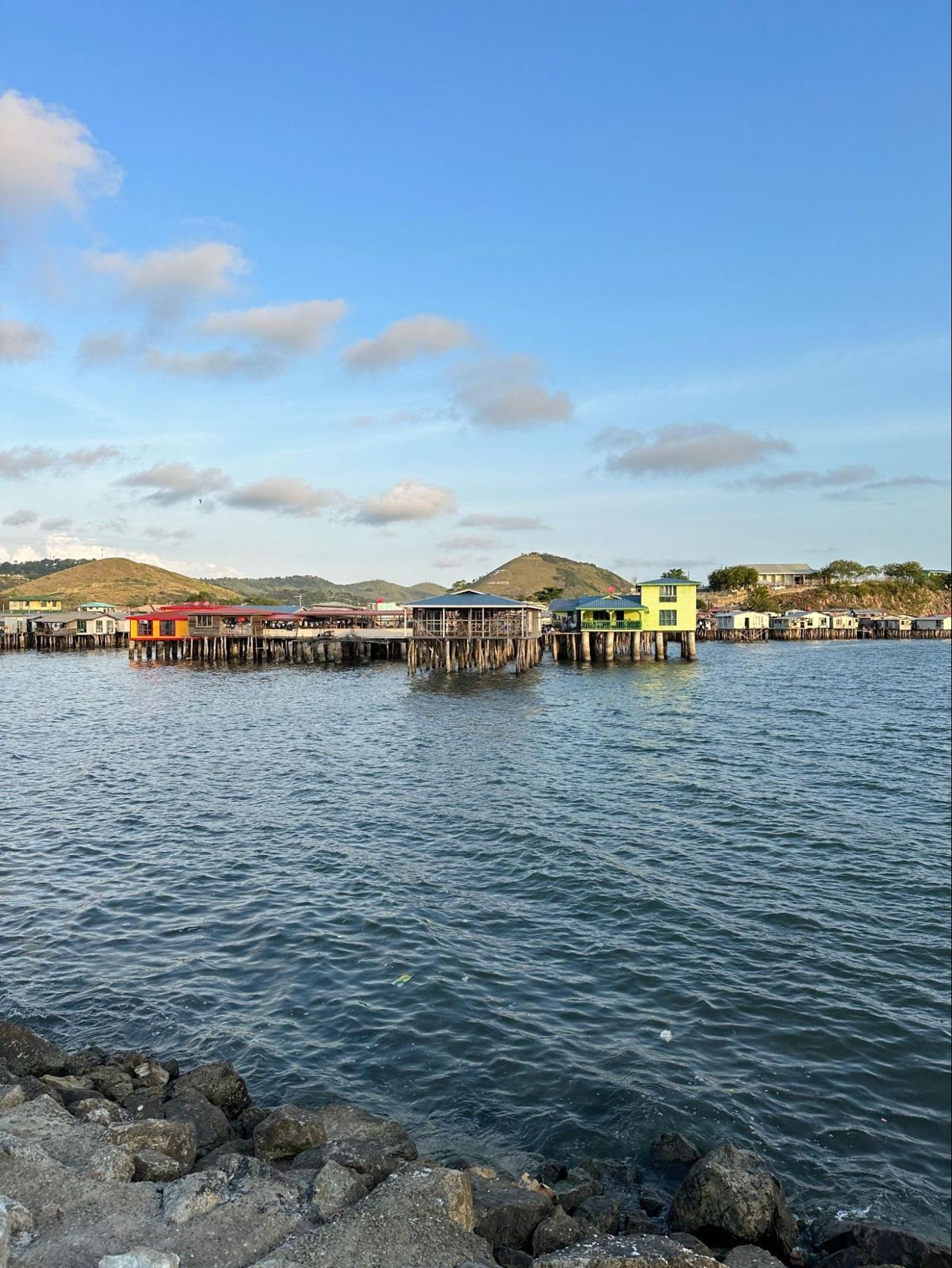
Just beyond the market is the Koki stilt village, a community of fishermen and their families living in homes built over the water. I was told it wasn't the safest place to wander into, so I checked it out from a distance, but it was still really cool to see.
What fascinated me most was the effort to encourage people to protect the ocean. Papua New Guinea has an enormous coastline, and so many people depend on fishing, so it makes sense that conservation is a priority. Sadly, the water was still very polluted, and locals have to find ways to live with that reality.
Rugby and Betel Nut: One thing I quickly learned is that rugby is the favorite sport here, by far. People told me it's almost a replacement for the old tribal rivalries, a way to release that energy. And let me tell you, they are very good at it!
But what really threw me off was the sheer number of people chewing betel nut. It's a natural stimulant, and while it's part of the culture, the government has been trying to crack down on it, especially people spitting the red, juicy saliva (ewww!) onto the sidewalks. I had to ask how it's done because it was simply fascinating. You chew the raw green nut, then dip a mustard stick into lime powder and chew it together with the nut, which creates the bright red color you see everywhere.
Visiting the National Museum: The next day, I went out to see more of the capital, passing by the famous Parliament House, which is designed after a traditional spirit house. Then I made my way to the National Museum and Art Gallery. Since I wasn't going to see the highlands or the outer islands, I figured the museum was my best chance to learn about the country's many cultures.
I was especially excited because Papua New Guinea has more than 800 languages, more than any other country in the world, and each one comes with its own traditions. Inside, I found shells that were once used as currency, masks from ceremonies across the country, traditional weapons, and even ornaments connected to cannibalism, a practice that ended decades ago.
My guide, Nara (who was actually the receptionist at my hotel!), also showed me the carved totem poles outside. Each one takes about three weeks to carve and tells a story from its village. Some of the carved figures were not shy at all about their anatomy! Certain tribes still wear a gourd sheath for protection, and I even bought my own, just in case.
Varirata National Park: We then drove about 50 kilometers outside the city to Varirata National Park, where people from Port Moresby go to get away from the hustle and bustle. Papua New Guinea is one of the most ecologically diverse countries in the world, with new species discovered all the time, and I wanted to get at least a small sense of that.
The landscape looked like something out of Jurassic Park. And the sound of the insects and birds was deafening, almost freaky! Meanwhile, James, our driver, was so relaxed that he even took a moment to have a full-on bath in the nearby river, soap, shampoo, and all!
A Humbling Experience: As beautiful as it is, Port Moresby also puts things into perspective. After nightfall, you pretty much have to lock it down. Poverty is high, and I was told that even people in fairly professional jobs might earn only $300 or $400 a month.
We often complain about our circumstances back home while earning ten or twenty times that amount, and here people are working hard just to make ends meet. It was a humbling experience, and I'll be honest, it also made me feel a little constrained, because I couldn't explore as freely as I normally would at night.
Bomana War Cemetery: As a kid, I read a lot about World War II, so I wanted to understand Papua New Guinea's role in it. The Japanese hoped to use the island as a forward base to invade Australia, and thousands on both sides endured terrible conditions in the early 1940s, with many dying from disease and combat, especially along the Kokoda Trail.
At Bomana War Cemetery, around 3,800 soldiers are buried, many of whom died on the trail. A lot of Papua New Guineans served alongside them as carriers, bringing the wounded to aid stations and hauling weapons and supplies through the jungle. It's said that the role locals played in the war helped pave the way to independence from Australia about 30 years later, in 1975. What struck me as ironic is that today, both Australia and Japan have strong relations with Papua New Guinea.
The Hunt for a Ride: On my final day, I wanted to hike the first part of the Kokoda Trail, which takes about nine days to complete in full. But getting there was no joke! I must have asked at least seven different people for a car. I needed someone reliable, someone who wasn't chewing betel nut or drinking, someone who spoke English and knew the terrain.
Thankfully, I finally found a driver, although he only had a basic taxi sedan. Ideally, you need a 4x4, because the last 17 kilometers or so to Owers' Corner, where the trail begins, are unpaved. And of course, we got a flat tire! Luckily, Jason, our driver, had a spare in the back and changed it in no time.
Hiking the Kokoda Trail: At the trailhead, I met my guide, who had hiked the Kokoda Trail many times over the years. He explained that it's a special trail for so many people because of the hardships that took place there, and that it's manageable in the dry season but really tough when the rains come. The full trek involves thousands of meters of climbing up and down the ridges, so thankfully we were only doing a section of it.
At one point, I asked him if I was the first Iraqi he had ever met. He said yes, so I told him I would do my best to be a good ambassador. When you travel, you often won't find people from your own country, so you want to make sure they remember you well.
Now, I made a rookie mistake by bringing only about a liter of water. It was around 82 degrees and super humid, and with all the climbing up and down the ridges, I was parched! After a little more than two hours, we reached the ridge where trekkers usually camp on the first night of the nine-day trek. Standing up there, I felt like I had been transported back to the time when Australians, Americans, and Papua New Guineans fought the Japanese along this sacred trail. It was easily the highlight of my trip!
AFTERWORD
I knew that a few days in and around Port Moresby would only scratch the surface of Papua New Guinea, and that's exactly what happened. But I still got a glimpse of its incredible natural beauty, from Varirata National Park to the ridges of the Kokoda Trail, and I learned so much about its cultures and its role in World War II.
The poverty and safety concerns were real and hard to ignore. But what truly makes this country unique is its people, from Nara showing me around the museum and Jason fixing that flat tire to my guide on the trail, who made sure I made it to the top.
I feel truly blessed to have made this journey, and I look forward to coming back to see the islands and experience the cultural festivals.
TRAVEL TIPS
KOKODA TRAIL: Don't hike it without a local guide, even if you're only doing a short section. The trail crosses customary land, and if you get lost, you could end up trespassing, which can cause major problems. Bring much more water than you think you'll need. One liter for two hours in that heat was not enough!
OWERS' CORNER: The road to the trailhead is best done in a 4x4 with a driver who knows the route. Arrange this a day or two in advance, because finding a reliable driver at the last minute can be tough. We made it in a sedan, but not without a flat tire!
BETEL NUT: Never take or mess with someone else's betel nut. Some people really rely on it, and it can be seen as offensive.
TIPPING: In the city, tipping at restaurants is fairly normal. In villages, you generally don't tip unless there's a donation box, for example at cultural demonstrations.
Stay Curious. And I look forward to seeing you on my next Final50 journey!
Travel Note: The information in this blog reflects my experience at the time of travel. Visa requirements, transportation, costs, and other travel conditions may change, so always verify the latest information before planning your trip.