
SETTING THE SCENE
I had heard so much about Palau before visiting that I wasn't sure whether it could live up to the hype. The country is famous for some of the best diving in the world and an incredible amount of World War II history. As someone who loves exploring both nature and historical sites, I was excited to finally visit.
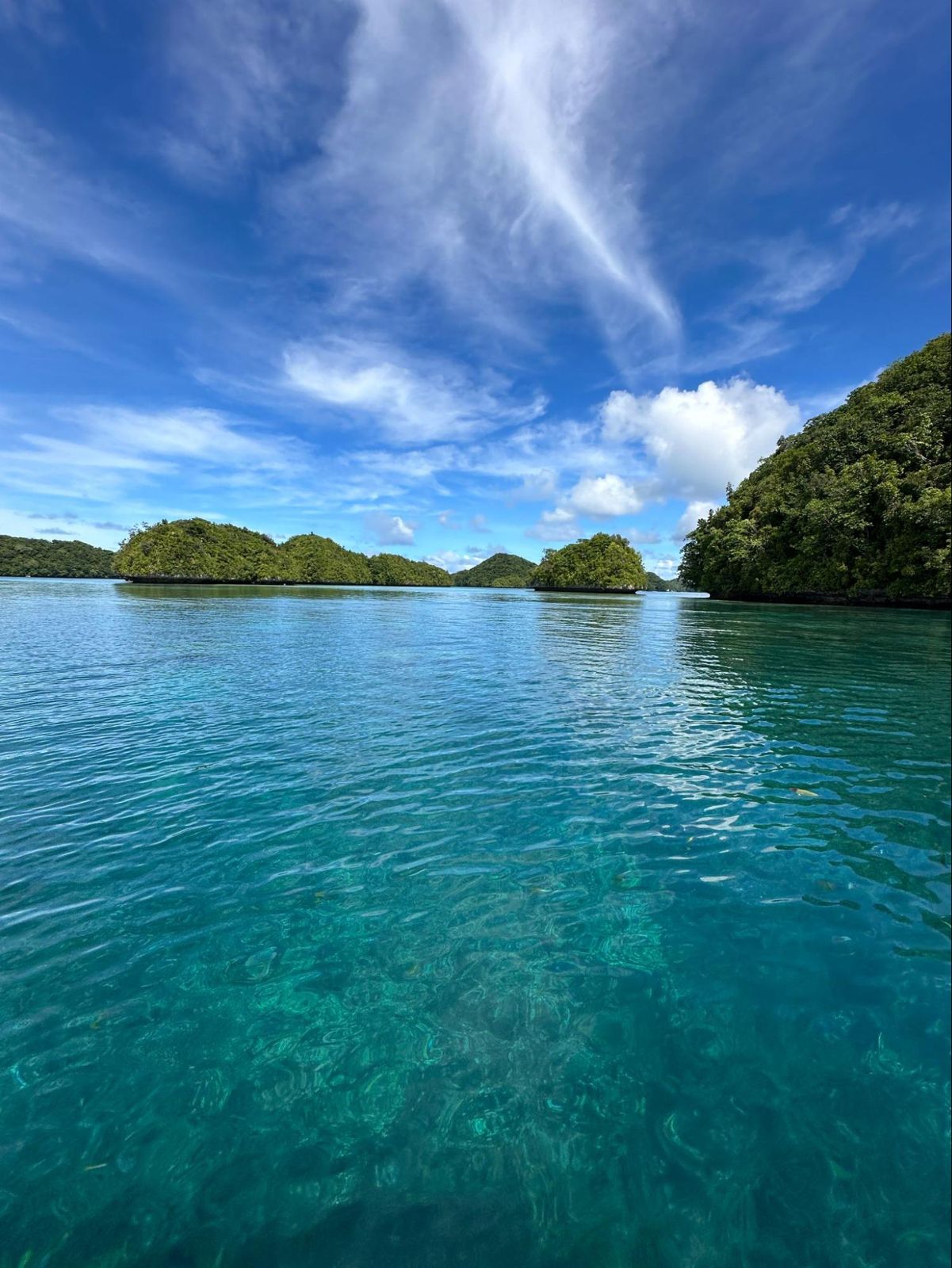
Located in the western Pacific, Palau is made up of hundreds of islands, many surrounded by clear turquoise waters and beautiful coral reefs. One of the main reasons I wanted to visit was to explore the Rock Islands, a UNESCO World Heritage Site that I had seen featured in National Geographic. I was also eager to experience the country's rich culture and learn how the people had managed to preserve so much of their natural environment.
I ended up spending several days driving around the main island, hiking to waterfalls, visiting historical sites, diving, snorkeling with sharks, and meeting some incredible people who helped make the trip unforgettable. And while I was there, I kept coming up with words to describe it: pristine, picturesque, paradise, and, unfortunately, pricey!
TRIP PREP
FLIGHTS: Getting to Palau from California can take more than 20 hours, depending on your connections. During my journey, I traveled through the Pacific using United Airlines miles. Guam is an important connection point, and other routes have operated through Manila and Taipei. I found that using United miles for the Guam connection could be a good option for keeping costs down. If you're combining Palau with other Pacific countries, check the flight schedules before organizing the rest of the trip.
VISA: American citizens can generally enter Palau for short visits without arranging a tourist visa in advance, but you should verify the current entry requirements. One thing that makes Palau different is the Palau Pledge, which asks visitors to respect and protect the country's natural and cultural environment. The pledge is part of the entry process, and environmental fees and permits may also apply depending on the activities you plan to undertake.
ACCOMMODATIONS: I stayed at the West Plaza Desekel hotel in Koror, which served as a convenient base for exploring the islands. There are accommodations for different budgets, although Palau is definitely not a cheap destination. Staying in or near Koror makes it easier to arrange diving, excursions, and transportation. I found the location practical because I could explore parts of town on foot while using my rental car for longer excursions.
GETTING AROUND: I rented a car through Lucy, a local contact who also helped organize some of my excursions. Having a vehicle made it much easier to explore the main island. The Compact Road connects many of the main areas and was well paved, clearly marked, and relatively easy to navigate. Taxis are also available, but the costs can add up. If you want to explore beyond Koror, I strongly recommend renting a car.
DIVING & EXCURSIONS: I went diving with Fish 'n Fins and had a great experience. I've always had trouble equalizing the pressure in my ears, so having an instructor who could work at my pace made a huge difference. Diving and boat tours can be expensive, so I recommend contacting operators well in advance and asking whether they offer group rates or discounts for booking several activities. For example, you may be able to combine a diving excursion with a Rock Islands tour for a better overall price.
MONEY & FOOD: Palau uses the U.S. dollar. I found the food scene somewhat disappointing because there were so many restaurants serving Japanese, Filipino, Chinese, and American cuisine, but I struggled to find traditional Palauan food. Given the country's history and foreign influences, the variety makes sense, but I had hoped to experience more local dishes. Prices were also higher than I had expected, especially for activities and excursions.
JOURNEY JOURNAL
Exploring Koror: I began my trip in Koror, the country's main commercial center, where much of the population lives and most tourism activities are based. One of the first things I noticed was how clean and well maintained everything seemed. Compared with some of the other Pacific islands I had visited, Palau felt very organized, with well-kept roads, public areas, and infrastructure.
I think part of that reflects the country's strong emphasis on environmental protection. There is a clear effort to preserve the natural environment, especially the marine ecosystems that attract so many visitors. I was also impressed by how the surrounding greenery seemed to extend right into the populated areas, creating a nice contrast between the buildings and the natural landscape.
As I explored Koror, I noticed how the town was spread across several connected islands. Bridges link different neighborhoods, and the surrounding water is never very far away. The main commercial streets had an interesting mixture of stores and restaurants, reflecting Palau's historical connections with Japan, the Philippines, the United States, and other countries in the region.
I enjoyed walking around and getting a feel for daily life before heading out to explore the rest of the country. And given how much I had planned, I knew I wasn't going to have a lot of downtime!
Palauan Culture and History: One of my first cultural stops was a traditional Palauan bai, a community meeting house decorated with elaborate carvings and paintings. I had never seen anything quite like it. The building was beautiful, but what really caught my attention were the images covering its exterior.
I learned that these houses have traditionally been used for community gatherings and ceremonies, and the artwork often tells stories about Palauan history and folklore. One image in particular caught my attention. It depicted a woman literally spread-eagle, which led me to learn about Dilukai, a female figure found in traditional Palauan art and stories. I'm going to let you look that one up yourself!
Another fascinating aspect of the culture is its matrilineal traditions, where family identity, property rights, and certain forms of authority are passed through the mother's side. I had encountered matrilineal societies on previous travels, but I was interested to learn how those traditions continued to shape Palauan communities.
I then visited the national museum to learn more about the country's history, including periods of Spanish, German, Japanese, and American colonialism. The exhibits helped explain how these different influences shaped the country's institutions, traditions, and architecture. Outside, I also came across old Japanese military equipment, another reminder of how important these islands had been during World War II.
World War II Sites: As many of you know, I'm a huge World War II history buff. So when I came across an abandoned Japanese communications center along the road, I had to stop and explore. The building was deteriorating, but you could still make out parts of its original structure, including areas that had once been used by the Japanese military.
What fascinated me was how accessible the site was. Unlike a museum where everything is organized behind glass, this building was simply sitting near the road, slowly being reclaimed by the surrounding vegetation. I walked around and tried to imagine what it must have been like when the facility was operating more than 80 years ago, during a time when Palau was an important Japanese military position in the Pacific.
The experience reminded me of the military sites I had explored in Micronesia and other Pacific islands. There are remnants of World War II scattered throughout the region, and some of the most fascinating discoveries happen when you're simply driving around and come across something unexpected.
Driving Around Babeldaob: With my rental car, I decided to explore Babeldaob, the country's largest island. The main road was well paved, and driving was straightforward. The island was incredibly green, with forests, small communities, and beautiful views of the surrounding landscape.
I had heard that there were several waterfalls on the island, including Ngardmau Falls, but I decided to check out another location that was accessible from the main road. I arrived relatively late in the afternoon, which probably wasn't the best idea given that I had to hike through thick vegetation to reach it.
The trail was quiet, and I was completely alone for much of the walk. The surrounding vegetation was beautiful, and I really enjoyed having the place almost entirely to myself, even though the trail felt creepy at times. After spending some time near the falls, I started making my way back, trying to beat the fading daylight.
I have to say, I was relieved when I finally reached my car. The experience was a reminder that even on relatively developed islands like Palau, you can find yourself completely alone in the middle of thick tropical vegetation.
Ngerulmud, the Capital: Another place I wanted to see was Ngerulmud, Palau's national capital. Unlike Koror, which is relatively busy, Ngerulmud is a small administrative center built around a series of large government buildings.
What surprised me was the scale of the architecture. The buildings reminded me of the U.S. Capitol and other government structures in Washington, D.C., but they were located in a quiet setting surrounded by greenery. It seemed odd to see such impressive government buildings in a country with such a small population.
I enjoyed walking around the area and taking in the contrast with Koror. Palau may be a small country, but its government buildings certainly don't look small!
Diving at Blue Corner: One of the main reasons I came to Palau was to experience its underwater world. I've dived in many countries over the years, but I have always struggled with equalizing the pressure in my ears. That can make diving uncomfortable, especially when you're trying to keep up with a group.
Thankfully, my dive operator arranged for me to have my own instructor, which made the experience much more enjoyable. I could descend gradually without feeling rushed, and my guide was incredibly patient throughout the experience. We completed two dives, including one at Fairyland and another at the famous Blue Corner.
Blue Corner was unreal! The currents were strong, and the amount of marine life was incredible. We saw sharks, barracudas, turtles, and all kinds of tropical fish. At one point, it felt as though there were animals everywhere I looked. I had heard that Palau offered some of the best diving in the world, and now I could understand why.
And then, toward the end of the excursion, we came across a pod of dolphins! It was an amazing experience, especially after having spent so much time underwater observing the other marine life. I had dived in some incredible locations before, but Palau really left an impression because of the sheer diversity of marine life.
After diving, we passed through some beautiful stretches of the Rock Islands, with towering limestone formations rising out of the turquoise water. Thankfully, we had a drone to capture the scenery because it was difficult to describe just how incredible it was.
Exploring the Rock Islands with Lucy and Wils: Another highlight of my trip was meeting Lucy, who owned a local tour company called FlyHigh Palau. Lucy had helped me arrange my rental car, and she also organized an excursion through the Rock Islands with her partner, Wils.
We headed out by boat, weaving between the incredible mushroom-shaped limestone islands surrounded by clear water. These were the images I had seen in National Geographic before visiting, and it was exciting to finally experience them in person. Every turn seemed to reveal another beautiful little island, lagoon, or stretch of coastline.
Our first stop was the Milky Way, an area known for its white limestone mud. People like to cover themselves with the mud, believing it is good for their skin, so naturally I had to give it a try! We also visited Clam City, where we snorkeled and saw giant clams and all kinds of tropical fish. Along the way, we explored areas with World War II wreckage and some amazing underwater scenery.
But the wildest experience was snorkeling with sharks. Palau established the world's first national shark sanctuary, and seeing these animals swimming freely in their natural environment was incredible. We were able to get surprisingly close to them, including several white-tip reef sharks. I have to say, it was both exciting and a little unnerving!
One of the more interesting food experiences happened during our excursion with Wils. He showed us a clam from his family's farm and explained how they traditionally prepare and eat them. We tried the clam raw with a little lemon and soy sauce. I had eaten plenty of seafood over the years, but this was a new experience for me, and I enjoyed hearing how his family had harvested and prepared these clams for generations.
It was an incredible day, and I'm so glad Lucy and Wils helped organize it.
AFTERWORD
Palau was one of the most beautiful countries I visited during my Pacific journey. The Rock Islands were absolutely incredible, both above and below the water. I loved the diving, snorkeling, waterfalls, and the opportunity to learn more about the country's culture and World War II history.
I was also impressed by the emphasis placed on environmental protection and the efforts to preserve the country's marine ecosystems. But what really made the trip memorable were the people, especially Lucy and Wils, who went out of their way to help me explore and understand Palau.
It takes a long time to get here from California, and it definitely isn't cheap, but the experience was worth it. I would love to return one day and spend more time exploring the islands, especially some of the diving locations that I didn't have a chance to visit.
TRAVEL TIPS
WATERFALLS: Babeldaob has several great hiking spots, including Ngardmau Falls. Start early enough to finish before dark, especially if you're hiking alone. I learned that lesson after setting off on my own a little too late in the day.
DIVING PACKAGES: If you're planning several excursions, ask operators about group rates or multi-activity discounts. Fish 'n Fins was excellent, and combining diving with other excursions may help bring down the cost. You can also ask whether a private instructor is available if you need more time or assistance underwater.
WORLD WAR II HISTORY: Beyond the museums, there are old military installations scattered around the islands. Consider visiting Peleliu if you're interested in the history of the Pacific War and have an extra day. Check boat arrangements and tour availability from Koror in advance.
Stay Curious. And I look forward to seeing you on my next Final50 journey!
Travel Note: The information in this blog reflects my experience at the time of travel. Visa requirements, transportation, costs, and other travel conditions may change, so always verify the latest information before planning your trip.