
SETTING THE SCENE
When I started planning my journey across the Pacific, the Marshall Islands was one of the countries I was most curious about. I knew a little about its history, especially the nuclear weapons testing conducted by the United States after World War II (how can you forget Bikini Atoll?), and I was interested in learning more about the country's relationship with America and the environmental challenges it faces today.
But what really fascinated me was its geography. The Marshall Islands consists of 29 coral atolls and five individual islands scattered across the Pacific Ocean. The capital, Majuro, is located on an incredibly narrow strip of land that runs around a lagoon. In some places, the island is so narrow that you can see the ocean on one side and the lagoon on the other within a short walk.
I also hoped to visit some of the smaller islands, experience the local culture, and learn more about the Marshallese people. Unfortunately, the weather had other ideas, and with limited transportation between the atolls, my plans didn't quite work out the way I had hoped. Still, I made the most of my time in Majuro and managed to get out to one of the nearby islands before leaving.
TRIP PREP
FLIGHTS: I arrived in Majuro as part of a wider journey through the Pacific. United Airlines operates an island-hopping service connecting several Pacific destinations, including the Marshall Islands and Micronesia. I used United Airlines miles for much of my Pacific journey, which helped keep the costs down. Since flights don't necessarily operate every day, I recommend planning your route carefully and building in some extra time for delays, especially if you're planning to visit several island countries on one trip.
VISA: American citizens can generally enter the Marshall Islands without obtaining a tourist visa in advance. However, you should confirm the latest passport and entry requirements before traveling. If you're using the United Airlines island-hopping route, make sure you also understand the requirements for any other countries or territories along the way.
ACCOMMODATIONS: I based myself in Majuro, where there are a limited number of hotels and guesthouses. I stayed at the Marshall Islands Resort, which was more expensive than some of the other options. But when I didn't hear back from several other hotels, I decided not to push my luck and booked the one that communicated best with me. It wasn't anything extraordinary, but it worked well enough for my stay, especially when the weather forced me to spend more time indoors than I had planned.
GETTING AROUND: Majuro has one main road running along much of the populated atoll. You can explore parts of it on foot, although the distances can be longer than they appear. Taxis are available for getting around town, and I did quite a bit of walking because I wanted to experience daily life along the island. Visiting the outer atolls requires much more planning because domestic flights and boats operate on limited schedules.
MONEY & FOOD: The Marshall Islands uses the U.S. dollar, which makes things easy for American travelers. I found a surprising amount of American food in the supermarkets, much of it imported. Restaurant options were more limited than I expected, mostly because importing food to such a remote country is expensive and complicated. I would recommend carrying some cash for smaller purchases.
JOURNEY JOURNAL
Exploring Majuro: After landing in Majuro, I was eager to get out and explore. Majuro Atoll stretches for roughly 50 kilometers, but much of the populated land is only a few hundred feet wide. I've visited a number of island countries over the years, but this was different. In places like Fiji or Samoa, you can venture inland and explore mountains, forests, and villages. In Majuro, there simply isn't much inland to explore. The ocean defines almost every part of life.
I decided to walk along the main road to get a sense of the capital and its people. I passed homes, shops, government buildings, and small markets. The infrastructure was modest, and I could see some of the challenges that come with living on a remote island with very little land. At the same time, the coastline was beautiful, especially during sunrise. Looking out across the lagoon, I could see fishing boats, small islands, and the incredible contrast between the blue water and the narrow strips of land surrounding it.
What really stood out was how close everything was to the water. Some homes were just a short distance from the ocean, while others faced the lagoon. It almost felt like living on a long sandbar! I kept thinking about how different everyday life must be when you can't simply drive inland to escape a major storm or flooding.
I also noticed the mixture of older homes, newer buildings, shops, and government facilities, all squeezed along the same main road. It was an interesting place to walk around because there wasn't a huge amount of conventional sightseeing to do. Instead, I was observing daily life and getting a feel for how people managed to live in such a geographically unique country.
Food and Daily Life: One of the things I enjoy most when traveling is trying local food. But in Majuro, I struggled to find restaurants serving traditional Marshallese dishes. What surprised me was the sheer amount of American food available in the supermarkets. From canned goods (yes, Spam, and lots of it!) to frozen meals and familiar snacks (cheese balls, Doritos, you get the picture), much of the selection looked like something you'd find at a 7-Eleven back in the U.S.
Given the country's close relationship with America, I suppose I shouldn't have been too surprised. But I had expected to see more locally produced food, especially fish and other seafood. Instead, it was interesting to see how much the country depends on imported products and how visible American food has become in the local market.
Thankfully, I eventually found a food truck serving some excellent food, with influences from Japan, Polynesia, and America. It was exactly the kind of place I had been looking for, combining different culinary traditions in a casual setting.
I also had the chance to try pandanus, a tropical fruit that I had never eaten before. It's a strange-looking fruit made up of multiple sections, and it can be eaten or prepared in several different ways. I always enjoy trying foods that are unfamiliar to me, even if I don't necessarily end up loving the taste. These little experiences are an important part of getting to know a place.
The Nuclear Legacy: One of the main reasons I wanted to visit the Marshall Islands was to learn more about the nuclear weapons testing conducted by the United States. After World War II, the islands came under U.S. administration, and several remote atolls were selected for nuclear testing during the Cold War.
Between 1946 and 1958, the United States conducted 67 nuclear tests in the Marshall Islands, including some of the largest nuclear explosions in history. The most famous was the Castle Bravo test at Bikini Atoll in 1954, which was far more powerful than scientists had anticipated. Radioactive fallout spread beyond the intended test area, affecting nearby communities and creating serious health and environmental consequences.
The impact on the Marshallese people was devastating. Some communities were displaced from their ancestral homes, while others were exposed to radiation and the long-term consequences of contamination. I had previously visited Hiroshima in Japan and the Chernobyl nuclear disaster site in Ukraine, so this was something I had thought about quite a bit during my travels.
But visiting the Marshall Islands gave me another perspective. Here was a small island nation whose people had been directly affected by nuclear testing conducted by one of the world's most powerful countries. I visited a local museum and learned more about the human and environmental consequences of that period. Seeing the photographs and historical exhibits was incredibly moving, especially when thinking about the families whose lives were forever changed.
What troubled me most was how long those consequences have lasted. Decades after the tests ended, the nuclear legacy remains part of the country's history and its relationship with the United States. It wasn't simply a chapter in a history book, and I was grateful to have had an opportunity to learn more about it while visiting.
Climate Change and the Future of the Islands: Another issue that was impossible to ignore was climate change. Much of the Marshall Islands sits only a few feet above sea level, and rising seas pose an enormous challenge to the country's future. As I walked around Majuro, I began to appreciate just how little room there was for people to move if the ocean flooded their homes. On many parts of the atoll, there was simply nowhere higher to go.
And yet I was surprised by how many cars were on the road. There were literally traffic jams during the busier parts of the day! Given how narrow the island was, I had expected to see more people walking or using public transportation, although I could also understand how the heat and long distances made driving convenient.
I noticed bus stops and some efforts to encourage public transportation, along with infrastructure supported by international partners, including Japan. But seeing so many vehicles on the road made me curious about what more could be done locally to reduce emissions and encourage other forms of transportation.
Of course, the Marshall Islands contributes very little to global emissions compared with larger industrialized countries. Yet its people face some of the greatest risks from rising seas, flooding, and coastal erosion. Seeing the geography firsthand gave me a much better appreciation for the challenges facing countries like this one.
Trying to Visit the Outer Islands: One thing I really wanted to do was explore beyond Majuro. The Marshall Islands has so many smaller islands and atolls, and from what I had heard, some offer incredible opportunities for snorkeling, diving, fishing, and experiencing local island life.
But getting around isn't easy. I looked into flights to some of the outer islands, but the schedules were limited and didn't work with my itinerary. Boat transportation was another possibility, but those services also required advance planning and tons of time on the ground. Unlike destinations where you can simply catch a ferry or book a quick flight, visiting the outer atolls takes some serious planning.
And then there was the weather. During parts of my stay, it rained a ton, disrupting my plans and limiting what I could do. I ended up spending more time at the hotel than I had wanted. At one point, I even found myself watching the U.S. elections unfold on television while waiting for the weather to improve!
Not exactly how I had envisioned spending my time in the middle of the Pacific, but that's sometimes the reality of traveling to remote destinations. You can organize everything in advance, and then the weather changes your plans.
A Day on Eneko Island: Thankfully, the weather eventually cleared up, and I managed to arrange a boat ride to Eneko Island, a small island within Majuro Atoll. After spending so much time exploring the main populated part of Majuro, getting out to Eneko was exactly what I needed.
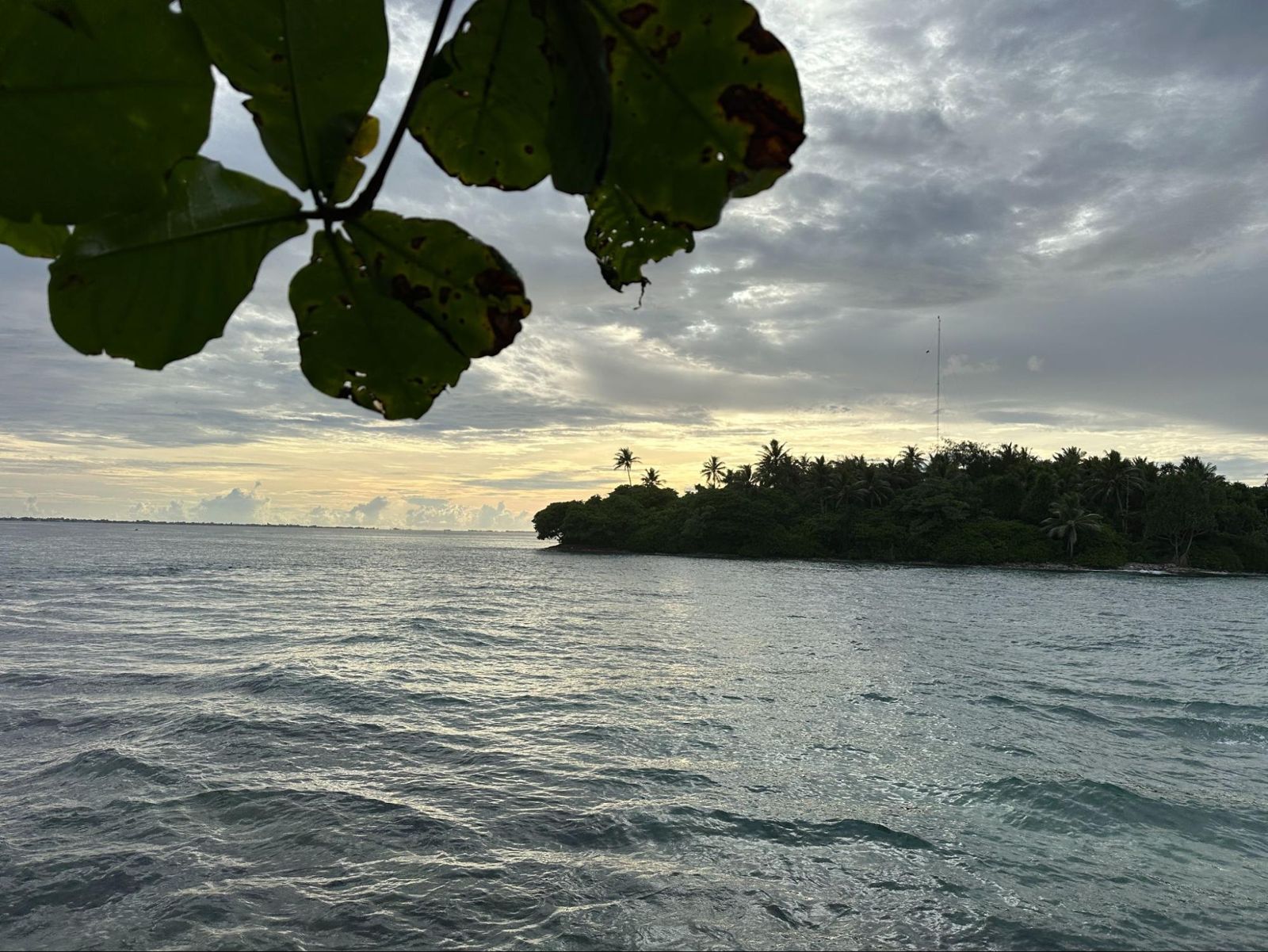
The island was surrounded by clear water, palm trees, and beautiful beaches. There was plenty of space to walk around, swim, snorkel, and simply relax. I spent the day exploring, enjoying the water, and taking in the surroundings, grateful that I had finally been able to get out on the ocean.
What I enjoyed most was the contrast with Majuro. There were no busy roads, traffic jams, or rows of buildings. Instead, there was the ocean, tropical vegetation, and a much quieter environment. It was the kind of place where I could sit and relax without feeling the need to be doing something every minute.
I would have loved to visit more of the surrounding islands, but given the limited time and weather conditions, Eneko was a great alternative. It also gave me an idea of how different the Marshall Islands might feel once you leave the capital and venture out to its many smaller islands and atolls.
AFTERWORD
My visit to the Marshall Islands didn't go exactly as planned. I didn't have enough time to explore the outer atolls, and the weather limited what I could accomplish, but I still learned a lot about the country's geography, nuclear history, and environmental challenges.
Walking along a narrow atoll with the ocean on both sides gave me a perspective that I had never experienced elsewhere. And learning more about the consequences of nuclear testing was both informative and emotional. I was also grateful that I managed to visit Eneko Island before leaving, because it gave me a taste of the natural beauty that makes this country worth exploring.
If I return, I would love to spend more time visiting the outer islands, maybe even the sites of the actual nuclear tests!
TRAVEL TIPS
ENEKO ISLAND: If you have limited time, consider a day trip to Eneko. It's a practical way to experience a quieter island without arranging a longer journey to a remote atoll. Confirm boat availability and weather conditions before heading out.
WEATHER: Build flexibility into your itinerary. Heavy rain and rough seas can affect island excursions, so avoid planning everything around a single day. If possible, leave a backup day for activities that depend on good weather.
BIKINI ATOLL: If you're interested in visiting the site of the nuclear tests, you'll need to investigate specialized expeditions and local access requirements. It's not a conventional day trip from Majuro, and the logistics, costs, and restrictions are very different from visiting Eneko Island.
Stay Curious. And I look forward to seeing you on my next Final50 journey!
Travel Note: The information in this blog reflects my experience at the time of travel. Visa requirements, transportation, costs, and other travel conditions may change, so always verify the latest information before planning your trip.