
SETTING THE SCENE
I had heard a lot about Malawi over the years, mostly because of its reputation as the Warm Heart of Africa, a reflection of the hospitality and kindness of its people. But what really intrigued me was Lake Malawi, one of Africa's largest freshwater lakes, known for its incredible biodiversity, beautiful islands, and hundreds of species of fish. So after attending a wedding of a close friend in Cape Town, South Africa, I decided it was finally time to jump on a flight and visit Malawi to complete my travels across Southern Africa.
Now, you would think that after traveling to so many countries I would have learned to organize my trips in advance. Well, not exactly! I arrived in Malawi without a proper itinerary, guide, or even transportation arrangements. I knew I wanted to explore the capital, Lilongwe, and somehow make my way to Lake Malawi, but beyond that, I was going to figure things out as I went along.
Thankfully, sometimes the best travel experiences happen when you least expect them. And this trip was certainly one of those occasions, especially when I discovered that I was about to have an entire island almost all to myself!
TRIP PREP
FLIGHTS: I flew into Lilongwe from South Africa, which was relatively convenient given that I was already in Cape Town. For travelers coming from America or Europe, you'll generally need to connect through another African destination. Lilongwe is a good starting point if you want to explore the central part of Malawi and visit the lake.
VISA: As an American citizen, I was advised to obtain a visa before traveling but had read that I could get one upon arrival. Thankfully, that worked out during my visit. However, visa policies can change, so don't assume my experience reflects the current entry requirements. Check with the Malawian authorities before departing.
ACCOMMODATIONS: I stayed in Lilongwe while figuring out the next leg of my journey. The real highlight, however, was staying at Mumbo Island Camp in Lake Malawi. The island has a small eco-camp with a handful of accommodations designed to blend into the natural surroundings. I'll get into that shortly because it was one of the more unique places I've stayed during my travels.
GETTING AROUND: If you want to explore outside Lilongwe, I would recommend organizing a local driver or guide. Distances can be challenging, road conditions vary, and getting to some of the more remote destinations takes time. I was incredibly fortunate to meet a local named Mervy, who helped organize my trip to the lake and made the whole experience so much easier.
MONEY: Bring enough cash, especially if you plan to venture outside the capital. I made the mistake of depending on an ATM, which deducted money from my account without actually dispensing any cash! That was a first for me, and definitely not an experience I want to repeat! The local currency is the Malawian kwacha, and I would recommend carrying some U.S. dollars as backup.
JOURNEY JOURNAL
Getting to Know Lilongwe: I arrived in Lilongwe eager to explore the capital and get a better sense of daily life in Malawi. Compared to some of the larger African capitals I've visited, Lilongwe felt relatively laid-back, with a mixture of urban neighborhoods, markets, and surrounding countryside.
Malawi is a landlocked country in southeastern Africa, bordered by Tanzania, Zambia, and Mozambique. It gained independence from Britain in 1964 and, like many countries in the region, continues to face significant economic and infrastructure challenges.
Since I didn't have a plan, one of my first stops was the local tourist office, and I found one right at the airport! I love visiting these offices because they're a great place to get some direction, learn about what there is to see, and hopefully connect with people who can help organize a trip. And that's exactly what happened!
I met a woman named Mervy, who was incredibly welcoming and eager to help. After explaining that I was visiting my 159th country and had only a few days to explore, she offered to help me figure out what I could realistically accomplish. Little did I know that meeting her would completely transform my experience in Malawi.
Running with the Hash House Harriers: As many of you know, I try to go for a run in every new country I visit. So when Mervy asked whether I wanted to join a local running group, I immediately said yes!
What I didn't realize was that this wasn't just any running club. It was the Hash House Harriers, an international social running group whose members proudly describe themselves as a "drinking club with a running problem." I had never heard of them before, but I figured why not give it a try?
The Lilongwe chapter meets on Mondays at different locations around the capital, with participants able to run or walk. I joined the running group, and we headed out through fields, villages, and rural areas on the outskirts of the city. It was a little rainy, but that didn't stop us from having a great time. Along the way, we interacted with local kids, encouraged them to run with us, and even caught an incredible rainbow stretching across the countryside.
Heading to Lake Malawi: After telling Mervy how much I wanted to see Lake Malawi, she managed to organize what would become the highlight of my entire trip. We stocked up on food and supplies and began the roughly five-hour journey across the countryside toward Cape Maclear, on the southern part of the lake.
And let me tell you, the drive was no joke! The roads were full of potholes, and although the distance wasn't that crazy, it took us close to five hours to reach our destination.
By way of background, Lake Malawi is the third-largest lake in Africa by surface area and one of the ten largest lakes in the world. It is famous for its freshwater biodiversity, with hundreds of species of fish found nowhere else on Earth. In fact, Lake Malawi National Park was designated a UNESCO World Heritage Site in 1984 because of its importance in protecting this unique ecosystem.
From Cape Maclear, we boarded a local boat and headed toward Mumbo Island, about 10 kilometers offshore. The boat ride took roughly 40 minutes, and as we approached the island, I could see why it was such a popular destination for people seeking some peace and quiet in nature.
An Entire Island to Ourselves: Mumbo Island is a small, largely undeveloped island within Lake Malawi National Park, surrounded by clear waters, enormous granite rocks, and thick vegetation. There are only a handful of accommodations, so even during the busy season the number of visitors is limited.
But when we arrived, we discovered something incredible. We were the only guests staying on the island! I mean, how often do you get an entire island almost to yourself? Apart from the incredibly friendly staff who worked there, we pretty much had the whole place to explore on our own. I couldn't believe our luck!
One of the staff members, Marriott, showed us around and explained what made Mumbo Island so special. He told us about the snorkeling, kayaking, and hiking opportunities and how the island could get quite busy during the popular travel months. Thankfully, I visited in February, during the rainy season, and we had gotten lucky with the weather.
The accommodations were also unlike anything I had experienced in quite some time. Rather than building a conventional hotel, the operators had created an eco-camp that worked with the surrounding environment. The rooms were built among the trees and rocks, connected by paths through the vegetation.
And then there was the bathroom. Imagine a composting toilet where you add wood shavings after using it, and a shower consisting of a large bucket of water suspended above you. The staff could even warm up the water if you preferred. All of this was surrounded by bamboo walls, with an enormous granite rock right next to you. Not exactly the kind of setup you'd find at a five-star hotel, but that was precisely what made it so special.
Exploring Mumbo Island: That first afternoon, we decided to hike along one of the trails through the island's thick vegetation to watch the sunset. The island is quite small, with a circumference of roughly three kilometers, but there are plenty of paths to explore through what feels like a little jungle.
We eventually found a great spot overlooking Lake Malawi and watched the sunset. It was definitely worth the hike. Later that evening, we had a delicious dinner of fresh chambo fish prepared by the staff using vegetables and rice we had brought with us. The fish was served with a local tomato sauce, and I have to say, it was excellent. Soft, tender, and full of flavor. If you visit Lake Malawi, make sure to try it.
After dinner, I had a chance to enjoy the night sky. With so little artificial light around us, the stargazing was simply amazing. And that night I could hear the waves gently crashing against the rocks and feel a light breeze blowing through the room. I woke up around 5:20 in the morning feeling completely refreshed and ready to continue exploring.
Kayaking and Snorkeling: The following morning, I wanted to maximize my remaining time on the island, so I grabbed a kayak and began paddling around the coastline. I also went snorkeling, which was another highlight. Unlike many of the places where I've snorkeled around the world, this wasn't an ocean reef. I was swimming in freshwater, surrounded by fish that have evolved over thousands of years in this one enormous lake. It was fascinating to see so many different species, especially the colorful cichlids.
In between the activities, I even had a chance to play Bao, a traditional board game played throughout parts of East Africa. I love these kinds of experiences because you get to learn something about local customs while interacting with people who call the country home.
But above all, what made Mumbo Island so memorable was simply having the opportunity to unwind. Sometimes, when I'm traveling, I feel the need to see as much as possible in the shortest amount of time. Here, I was perfectly happy just sitting by the water, enjoying the surroundings, and taking it all in.
Back to Lilongwe: Eventually, it was time to head back to the mainland and begin the long drive toward Lilongwe. Along the way, we made several stops to experience more of the countryside and enjoy the scenery.
One of the things that stood out to me was the enormous baobab trees scattered throughout the landscape. I had seen these incredible trees on previous trips to Africa, especially in Madagascar, but they never cease to amaze me. Each one seems to have its own shape and personality, with massive trunks that almost resemble an elephant's foot. They can live for hundreds, sometimes thousands, of years, making them an important part of Africa's natural heritage.
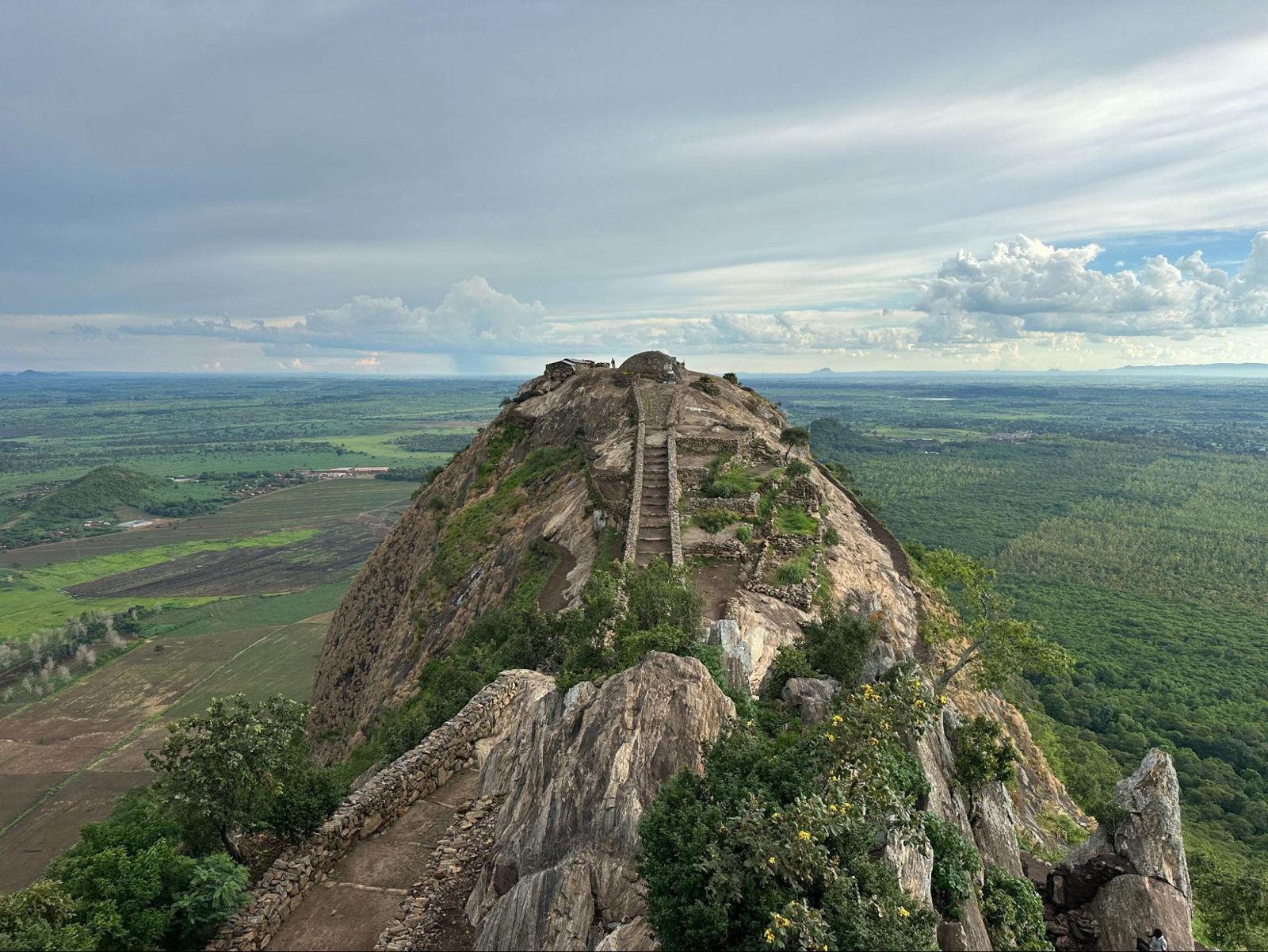
But Mervy had one more surprise in store. She suggested we make a climb up a local hill that had religious significance and offered spectacular views of the surrounding landscape. Given how spontaneous the entire trip had been, I figured why not?
We made our way up and saw some incredible views stretching for miles across the countryside. It was a great way to end what had been an incredibly memorable excursion before returning to the capital.
AFTERWORD
I have to say, Malawi was a very pleasant surprise. While I was able to explore only a small part of the country, I got a great introduction to its natural beauty, culture, traditions, and, most importantly, the hospitality of its people.
For me, the highlight was undoubtedly Mumbo Island. From having the entire island almost to ourselves to kayaking, snorkeling, hiking, and just relaxing in nature, the experience was unlike anything I had expected when I first landed in Lilongwe without much of a plan.
But I also have to give a special shout-out to Mervy, who went out of her way to help me organize the trip and introduce me to her country. Without her, I doubt I would have experienced Malawi in quite the same way.
Now I understand a little better why Malawi is known as the Warm Heart of Africa. And I certainly hope to return one day to explore more of the country's nature, wildlife, and communities.
TRAVEL HACKS
MUMBO ISLAND: Book ahead because there are only a handful of accommodations. Visiting during the rainy season can mean fewer tourists, but you take a chance with the weather.
RUNNING & HIKING: If you enjoy running, look into whether there is a local Hash House Harriers chapter operating during your visit. Also, if you're hiking on Mumbo Island, make sure you have enough daylight to find your way back.
SWIMMING IN THE LAKE: Travelers should be aware of the risk of schistosomiasis, also known as bilharzia, in parts of Lake Malawi. Consult a travel health professional about freshwater exposure before your trip.
LOCAL CUSTOMS: Malawi is a relatively conservative country in many areas, so dress respectfully, especially when visiting rural communities.
EXTRA TIME: If you have a longer itinerary, consider exploring Liwonde National Park, Mount Mulanje, or other regions of the country. I wasn't able to visit them on this trip, but they would definitely be on my list for a return visit.
Stay Curious. And I look forward to seeing you on my next Final50 journey!
Travel Note: The information in this blog reflects my experience at the time of travel. Visa requirements, transportation, costs, and other travel conditions may change, so always verify the latest information before planning your trip.