
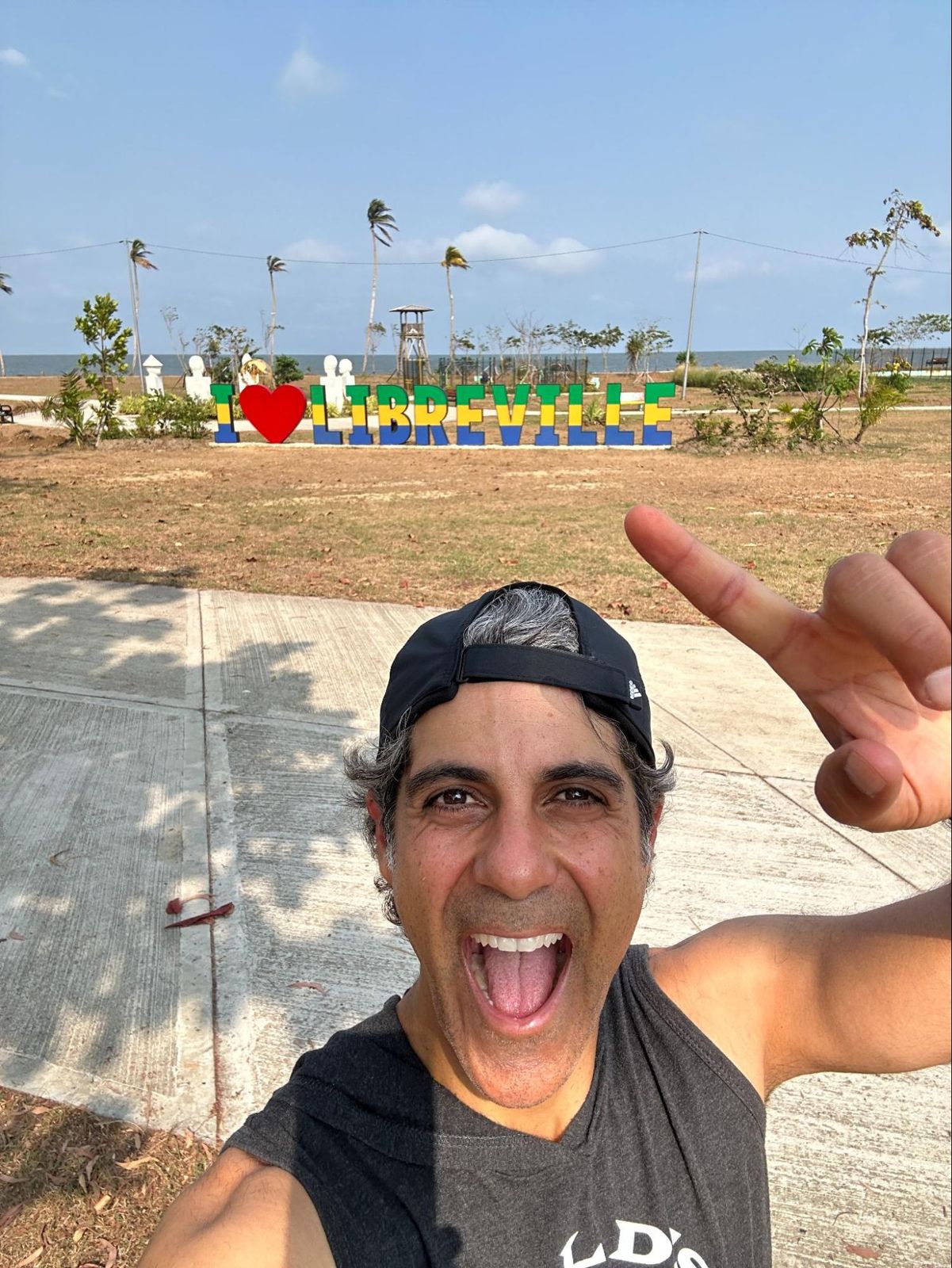
SETTING THE SCENE
I have been curious about Gabon, a country in Central Africa, for a while, mostly because it is referred to as Africa's Last Eden. With over 90% of its territory covered in forests, incredible biodiversity, and some of the most unique wildlife on the continent, including hippos that apparently surf in the Atlantic Ocean, I was really excited to see the country.
Unfortunately, this was not meant to be that kind of trip. A combination of flight delays, personal family circumstances, and a frustrating visa situation severely limited my time in the country. In fact, I ended up spending just 36 hours in Gabon, all of it in the capital of Libreville. Frankly, this is often what can happen when trying to travel to remote parts of the world. To see countries like Gabon, with so much nature, you need at least a week with the right guide who can take you deep into the interior to explore the national parks. That was time I didn't have. Also, if you're rushed and travel on your own, things get very expensive very quickly. I was also limited on funds, given I was planning to visit four African countries on that trip from America.
That said, I was determined to make the most of the time I had. What I discovered was a country with a fascinating history, incredibly rich cultural traditions, and a capital undergoing significant economic and infrastructural changes. So let's get into it and give you a brief background of the experience.
TRIP PREP
FLIGHTS: I flew directly from Istanbul to Libreville on Turkish Airlines, which was quite convenient. Other international airlines serving Gabon include Air France, Royal Air Maroc, and Ethiopian Airlines, so there are several options to consider depending on where you are traveling from. Given the limited time I had, I decided to spend my time in Libreville rather than even attempt to venture outside the capital.
VISA: This was probably one of my biggest travel mistakes in recent memory! As an American citizen, I had applied for an electronic visa before leaving for Gabon and received confirmation of my application. For whatever reason, I assumed that the receipt was sufficient to secure my visa upon arrival. I was completely wrong!
When I landed, the immigration authorities told me that I had not been issued an actual visa and therefore could not enter the country. They asked whether I knew anyone locally who could vouch for me, and when I said no, they told me I would have to leave on the next available flight. After some rather stressful discussions, an airport official was kind enough to intervene, sign some documents vouching for me, and allow me to enter. Phew, I felt like I dodged a bullet!
The lesson here is simple: Make sure you have received your actual visa approval before boarding your flight. Don't assume an application receipt is sufficient. Also, visa requirements have changed since my visit in 2025, particularly for American citizens, so make sure to verify the latest restrictions with the Gabonese Embassy before making any travel arrangements.
ACCOMMODATIONS: I stayed at a local hotel called 'The Hibiscus', which was relatively central and affordable. It wasn't anything exceptional, but it served its purpose, especially since I planned to spend almost all my time exploring the city. There are international hotels like the Radisson if you prefer something more upscale, but I wanted to keep my expenses down.
GETTING AROUND: I decided to explore Libreville almost entirely on foot. In fact, I walked over 30,000 steps in one day, which gave me a great sense of the different neighborhoods, markets, architecture, and daily life of the people. Taxis were not always easy to find, so if you need transportation, I would recommend asking your hotel to arrange a driver or even using Gozem, which is a ride-share app operating in Gabon.
MONEY & FOOD: One thing I learned on this trip was the importance of carrying a Visa card and local cash. My Mastercard was not accepted at several ATMs and restaurants, which made things complicated. As for food, I had a delicious fish dinner near the beach and would definitely recommend trying the local seafood. Check out my vlog, where I explain what I was actually eating.
JOURNEY JOURNAL
Arriving in Libreville: By the time I finally cleared immigration and made my way to the hotel, I was completely exhausted. I had been dealing with some difficult family circumstances and had traveled back and forth between California and the Middle East before flying to Gabon. The visa incident was not what I needed, but I was grateful to be in the country and really wanted to make up for lost time by exploring the capital.
The next morning, I headed out on foot to explore Libreville. The city is situated along the Atlantic coast and has close to a million inhabitants in its greater urban area. One thing that I immediately noticed was the contrast between the older architecture and newer developments, especially along the waterfront. You can see how the country is working towards modernizing while still retaining much of its colonial-era infrastructure.
Exploring the Markets and Religious Traditions: One of my first stops was Saint-Michel de Nkembo, a church featuring 31 incredible wooden pillars carved by a blind Gabonese master carver named Zéphyrin Lendogno. The carvings incorporated African faces and mythology alongside approximately 70 scenes from the Old and New Testaments. I have to say, the craftsmanship was remarkable and gave me an appreciation for the country's artistic traditions and religious devotion, especially to the Christian faith while not forsaking its own heritage.
From there, I continued walking toward Marché du Mont-Bouët, the largest market in Libreville. I love visiting local markets because they give you such a great sense of how people live, what they eat, and how they interact with one another. This market was no exception, with everything from fresh produce and local delicacies to electronics, clothes, and household goods. Side note: be careful when filming in these types of markets. For whatever reason, locals can get really upset when foreigners are filming, especially if you film their faces. Be careful, ask permission, or just avoid filming people altogether.
Not far from the market, I came across a mosque, which reminded me of the religious diversity that exists throughout much of Africa. While Christianity is the predominant religion in Gabon, there is also a sizable Muslim community, estimated at around 10% to 15% of the population, and I always find it interesting to observe how different religious communities coexist.
As I continued walking, I passed Stade Omar Bongo, a massive stadium that had been undergoing renovations for the 2012 Africa Cup of Nations. Unfortunately, the project was never completed as planned, and much of the structure had been left abandoned for years. It was quite something to see so much money invested in a sporting facility that had yet to be put to proper use.
Discovering Gabonese Culture: Around midday, I stopped at Pélisson, a historic local establishment that has been around for almost a century. After hours of walking, I needed a caffeine boost and some time to catch up on writing before heading out again.
One of the things that fascinated me about Gabon was the use of traditional masks in ceremonies and rituals. I came across several of these at a local artisanal market. By the way, make sure to stop by the market because, even though it's small, it packs one hell of a punch in terms of really cool things to buy and also gives you a sneak peek into the local culture and traditions.
Since I'm a huge aficionado of politics and history, I decided to spend some time at the National Museum of Arts and Traditions. In fact, the museum was probably the highlight of my entire trip! I met an incredibly knowledgeable guide named Vinne, who went out of his way to explain the history, traditions, and beliefs of the different communities that make up Gabon. I learned how certain masks were historically used by secret societies to settle disputes, enforce traditional rules, conduct initiation rites, and connect with ancestors.
We also discussed Bwiti, a spiritual tradition that incorporates music, dance, and ceremonial practices. In fact, one of the more fascinating aspects of Bwiti is the ceremonial use of iboga, a plant native to Central Africa whose roots contain psychoactive compounds. In some ways, the experience is like ayahuasca ceremonies in South America, although they use different plants and have their own distinct cultural and spiritual practices. What I really found fascinating was how deeply these traditions remain connected to the identity of the people, even as Gabon continues to modernize.
If you visit Libreville, I would highly recommend spending time at the museum, and if Vinne is still there, make sure to look him up!
Chocolate, History, and a Changing Capital: After leaving the museum, I continued exploring the city and came across a local chocolate business founded by a woman named Julie. I was fortunate enough to meet her and hear how she established Gabon's first bean-to-bar chocolate factory, working with local cocoa producers. And the chocolate was delicious, especially the coffee-flavored chocolate!
Later, as I walked along the coast, I came across a monument commemorating the abolition of slavery by France in 1848. Known as the Freedom Stele, it also commemorates the founding of Libreville in 1849 by formerly enslaved people. I wanted to get closer and film it, but I was quickly stopped by security guards stationed near the presidential palace across the street. They made it clear that filming was not allowed. This was yet another reminder to be careful when taking photographs near government buildings, especially in countries that have recently experienced political upheaval.
My final major stop of the day was the Bay of Kings, a massive waterfront redevelopment project intended to transform part of Libreville into a modern commercial and recreational district. It is planned to feature one of the tallest buildings in Central Africa, the 50-plus-story Libreville Tower, along with public spaces, office buildings, and other developments. Given the country's considerable natural resources, especially oil, manganese, and timber, the government's ambitions for the future of the capital are quite something to see. Of course, the real test will be whether these investments deliver long-term benefits for the local population.
I ended the evening relaxing near the beach before having a nice fish dinner at a local restaurant. After all that walking, I was more than ready to call it a night!
One Last Run: The following morning, I continued my tradition of going for a run in every new country I visit. Libreville has a great coastal promenade that stretches for several kilometers, so it was a perfect place to exercise while enjoying views of the Atlantic. After the run, it was time to head to the airport and continue my African journey.
AFTERWORD
My time in Gabon was far shorter than I had hoped, and I have to say I was disappointed that I wasn't able to explore the country's famous national parks and forests. Just so that you know, there is so much incredible nature here, from the wildlife of Loango National Park to the beaches, rainforests, and coastal ecosystems that have given Gabon its reputation as Africa's Last Eden.
That said, I am very grateful for the time I had in Libreville. I learned a lot about Gabon's history, the tribal and spiritual traditions of its people, the importance of its art and culture, and the economic changes taking place throughout the country. Above all, I appreciated the kindness of the people I encountered, particularly those who went out of their way to help me, from the airport official who saved my trip to Vinne at the museum.
I definitely look forward to returning, this time with enough time to explore the country's natural wonders and, hopefully, finally see those famous surfing hippos!
TRAVEL HACKS
VISA APPROVAL: Don't make the mistake I made! If you are required to obtain an electronic visa, make sure you have the final approval rather than just the application receipt. Importantly, Gabon announced restrictions on visa issuance to American citizens in December 2025, so U.S. travelers should confirm the current rules directly with the Gabonese Embassy before booking their trip.
CREDIT CARDS: Bring a Visa card and enough cash to cover your basic expenses. My Mastercard caused problems at several ATMs, and you don't want to find yourself unable to access your money while traveling. The local currency is the Central African CFA franc (XAF).
WALKING LIBREVILLE: If you enjoy walking as much as I do, Libreville is worth exploring on foot, especially along the coast and in the central neighborhoods. Just remember that the weather can be hot and humid, so bring plenty of water and plan accordingly.
LOCAL GUIDES: Even if you don't hire a guide for the entire trip, I would strongly recommend one at the National Museum. The explanations I received were invaluable in helping me understand the cultural significance of the artifacts and traditions on display.
PHOTOGRAPHY: Avoid photographing government buildings, military facilities, and especially the presidential palace. I learned this firsthand, and it is simply not worth getting into trouble over a photograph. Also, be respectful of locals when filming in markets and residential neighborhoods.
HEALTH REQUIREMENTS: Make sure to bring your yellow fever vaccination certificate, which is required for entry into Gabon for travelers over nine months old. Also, consult a travel health professional about malaria prevention and other health precautions before your trip.
EXTRA TIME: If you have an additional day in Libreville, consider visiting Pointe-Denis beach or Pongara National Park. Unfortunately, I didn't have time for either, but they would be high on my list for a return visit.
Stay Curious. And I look forward to seeing you on my next Final50 journey!
Travel Note: The information in this blog reflects my experience at the time of travel. Visa requirements, transportation, costs, and other travel conditions may change, so always verify the latest information before planning your trip.