
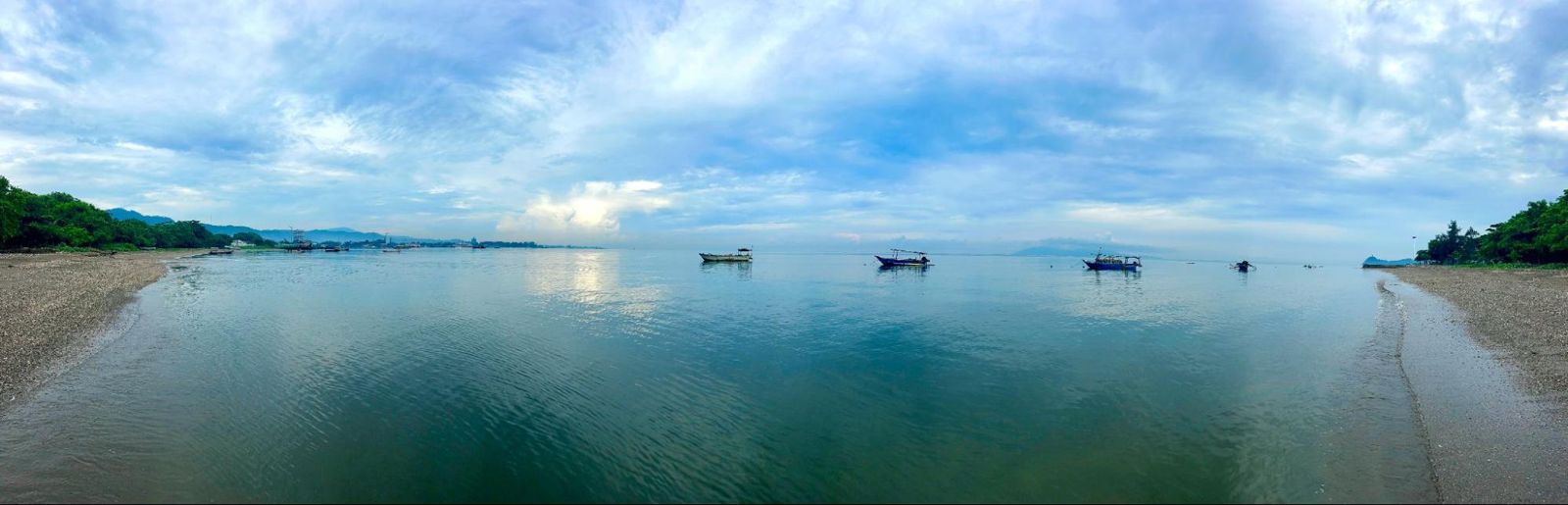
SETTING THE SCENE
I first learned about East Timor when I was in college taking a class on independence movements. I remember being fascinated by the country's long struggle to become independent, especially against the Indonesian military, which occupied the territory for nearly a quarter of a century.
So when I started planning my next Final50 adventure, I knew I wanted to visit this relatively young country and learn more about how its people had fought for their independence despite the odds stacked against them. I had also heard about the rich cultural traditions, beautiful landscapes, and hospitality of the Timorese people, which made me even more eager to visit.
Let's get into it!
TRIP PREP
FLIGHTS: Getting to East Timor can be challenging because there are relatively few international routes. I had to travel from Singapore to Bali, spend the night, and then catch another flight the following morning to Dili, the capital. In total, it took me almost 40 hours to get to East Timor from California. Depending on your starting point, you may also find connections through Australia or other regional hubs. Make sure to check the schedules carefully because flights may not operate every day.
VISA: During my visit, American citizens were generally eligible to obtain a tourist visa on arrival at Dili International Airport. However, entry requirements and procedures can change, so check with the Timorese immigration authorities before departing.
ACCOMMODATIONS: I based myself in Dili for the duration of the trip. Given the limited time I had, it was the most practical place to stay, with access to restaurants, markets, museums, and transportation for day trips. There are local hotels and guesthouses across different price ranges, although accommodation options become more limited outside the capital.
GETTING AROUND: I used local taxis and arranged transportation for excursions outside the city. Road conditions can be challenging, especially in mountainous areas during the rainy season. I was fortunate to have help from Maria, a local contact introduced to me by a friend from graduate school, who helped me figure out which destinations were realistic given my schedule.
MONEY & FOOD: East Timor uses the U.S. dollar as its official currency, which makes things convenient for American travelers. I would recommend carrying cash for smaller purchases and trips outside Dili. One of the highlights of my visit was the food, especially the fresh local produce and some excellent farm-to-table restaurants.
JOURNEY JOURNAL
First Impressions of Dili: After finally landing in Dili, I grabbed a taxi and started making my way into the capital. As we drove through the city, I began to notice the mix of old colonial buildings, government institutions, and newer developments. There was also an incredible amount of street art, much of it celebrating independence, education, peace, and hope for a better future.
It makes sense when you realize that East Timor is one of the world's youngest sovereign nations, and the struggle to achieve that independence remains a central part of its national identity.
Exploring the Capital: I decided to spend my first day exploring Dili on foot and visiting some of the city's main landmarks.
One of my stops was the Tais Market, a local artisan market known for its traditional woven textiles. I always enjoy visiting these kinds of markets because they offer an overview of local traditions in one place.
Another thing that immediately stood out was the country's strong Catholic identity. East Timor is one of the most Catholic countries in the world, with over 90% of its population identifying with the faith. You can see that influence everywhere, from churches and religious imagery to the enormous Cristo Rei statue overlooking Dili, which I planned to visit later in the trip.
I also stopped near the Palácio do Governo, the main government building in the capital. The architecture reflects the country's Portuguese colonial history, but the institutions operating there today represent Timorese independence.
Learning About the Struggle for Independence: One of the biggest reasons I wanted to visit East Timor was to understand its modern history. So I made time to visit two museums dedicated to the country's struggle for independence.
At the Resistance Museum and Archives, I learned about the decades of conflict and the sacrifices made by ordinary Timorese citizens. The museum contains photographs, documents, and other materials that help explain how the resistance operated under Indonesian occupation.
I wasn't allowed to photograph parts of the museum, but I spent a considerable amount of time going through the exhibits and learning about the experiences of people who lived through those volatile years.
Santa Cruz Cemetery: That evening, I made my way to Santa Cruz Cemetery, the site of one of the most notorious massacres of the Indonesian occupation.
On November 12, 1991, more than 200 people were killed by Indonesian forces, and many others were wounded or disappeared. What made the massacre significant was that foreign journalists managed to record footage of the killings. Those images helped bring international attention to the atrocities being committed in East Timor and became an important turning point in the country's struggle for independence.
As I walked between the graves, the sky began to darken and it started to rain. I have to say, it was one of the most emotional moments of the entire trip. Standing among the graves, knowing what had taken place there just a few decades earlier, gave me a much deeper appreciation for the sacrifices that led to East Timor's independence.
A Trip to the Countryside: One of my friends from graduate school had previously worked in East Timor, establishing a nonprofit to support local communities. He introduced me to Maria, who still lived on the island and was incredibly helpful in organizing my visit.
Initially, I had wanted to explore several destinations far outside Dili, including Baucau, Jaco Island, and Mount Tatamailau. But after learning more about the roads and the travel times, I realized that I just didn't have enough time. Maria suggested an alternative: a green-tourism excursion to a rice-farming community in the mountains, where I could learn about local agriculture and traditional ways of life. I thought that sounded awesome!
The following morning, I joined a group that included several Peace Corps volunteers and set off on the roughly 90-minute journey into the countryside. Now, the drive was no joke. The roads were narrow and uneven, and in some places there was damage from landslides and heavy rain. But the surrounding scenery was beautiful, with green mountains, fields, and small villages scattered across the landscape.
I also appreciated the opportunity to meet the Peace Corps volunteers and learn more about their work supporting local communities. It reminded me how much positive work Americans do around the world, often far from the headlines.
Planting Rice, Fishing, and Farming: Once we reached the village, we were introduced to the local farming activities. One of the first things we were going to do was plant rice.
Now, I've eaten rice my entire life, but I had never really appreciated how much effort goes into growing it. Let me tell you, planting rice is no joke!
We rolled up our shorts, stepped into the muddy rice paddies, and began learning how to separate the seedlings and place them into the soil. I was trying to follow the instructions, but between the mud, the slippery footing, and the bugs, I was really struggling!
At one point I spotted an enormous spider and almost lost it. I don't know how the farmers do this every day. After much help from the locals, I finally got the hang of it, and I have to say I came away with a newfound appreciation for every bowl of rice I eat.
We also tried our hand at fishing, although I wasn't successful, and learned how the community grows different types of produce. Later, we enjoyed a meal prepared using ingredients grown locally.
One of the other highlights was planting a tree. It was a simple activity, but I loved the idea that something I planted could continue growing long after I had left the country. I hope to return one day and see how it's doing!
Meeting Caesar and Trying Local Food: One of the most memorable people I met during the excursion was Caesar, a local chef who had a deep knowledge of Timorese cuisine, agriculture, and traditional food production.
Caesar explained how his approach connects farming and cooking in a continuous cycle. Food is grown locally, prepared for customers, and organic waste is composted and returned to the land. He was also concerned about protecting traditional seedlings and farming methods as the country continues to develop.
Later that evening, I visited his restaurant, Dilicious Timor, and had an incredible meal. It was such a satisfying way to end the day, especially after having spent hours learning about how the food was grown.
Speaking of food, I forgot to mention that on the first night I also visited Agora Food Studio in Dili, another restaurant that emphasized fresh, locally sourced ingredients. I tried homemade pumpkin noodles prepared with local produce, coconut, chicken, and prawns. I can still remember how delicious that meal was!
Final Day: On my final day, I decided to continue my tradition of going for a run in every new country I visit.
I wasn't feeling very well, and the weather was hot and humid, but I was determined to make my way to Cristo Rei, the enormous statue of Jesus overlooking Dili. The statue was built during the Indonesian occupation and unveiled in 1996. Today, it remains an important religious landmark and one of the most recognizable symbols of the capital.
Getting there was exhausting in the heat, but seeing the statue and the views over the coastline made it worth the effort.
Afterward, I managed to find a ride back toward the city and treated myself to a refreshing coconut water. I was completely dehydrated and more than ready to relax before heading to the airport.
AFTERWORD
I had traveled halfway around the world to learn more about the country's struggle for independence, and I left with a much deeper appreciation for the resilience, pride, and determination of its people.
What struck me most was how strongly the Timorese hold onto their identity. Their language, religious beliefs, traditions, and communities played an important role in helping them endure decades of hardship and eventually achieve independence.
I also loved the time I spent in the countryside, learning about farming, meeting the Peace Corps volunteers, and hearing Caesar explain his approach to sustainable agriculture. And of course, the food was fantastic!
There is still so much of the country I would love to see, especially the eastern regions, the mountains, and the remote beaches and islands that I wasn't able to visit this time.
TRAVEL HACKS
RURAL EXCURSIONS: If you want to experience local life, consider a community-based tourism excursion. My visit to the rice-farming village was one of the highlights of the trip.
HISTORY: Make time for the Resistance Museum and Santa Cruz Cemetery. They provide an important perspective on the country's recent history that you won't get from simply exploring Dili.
EXTRA TIME: If you can stay longer, consider visiting Baucau, Jaco Island, or Mount Tatamailau. I wasn't able to explore them, but they would be high on my list for a return visit.
Stay Curious. And I look forward to seeing you on my next Final50 journey!
Travel Note: The information in this blog reflects my experience at the time of travel. Visa requirements, transportation, costs, and other travel conditions may change, so always verify the latest information before planning your trip.