
SETTING THE SCENE
Before planning my trip, I didn't know a whole lot about the Comoros Islands other than their location off the eastern coast of Africa and the fact that they were members of the Arab League. I was curious about how this small island nation, with its mix of African, Arab, and French influences, had managed to preserve such a unique identity.
The name itself fascinated me. In Arabic, Comoros is associated with the word for moon, hence the Moon Islands, which you can even see reflected in the country's flag. I was also eager to explore the volcanic landscapes, beaches, religious traditions, and local food. From what I had read, the islands were home to some incredible wildlife and a number of fascinating local legends.
After visiting Malawi, I flew to Comoros to continue my travels through Africa. I had only a few days, so I decided to focus on Grande Comore, the largest island, and its capital, Moroni. I didn't have a detailed itinerary or local guide, but I was hoping to find someone who could help me explore beyond the capital.
TRIP PREP
FLIGHTS: I flew into Moroni through Nairobi, Kenya, which was a convenient and reasonably priced connection. Other cities with direct flights to Moroni include Addis Ababa in Ethiopia, Dar es Salaam in Tanzania, Dzaoudzi in Mayotte, Mahajanga in Madagascar, and Saint-Denis in Réunion. Airlines serving these routes include Kenya Airways, Ethiopian Airlines, Air Tanzania, EWA Air, Madagascar Airlines, and Air Austral. Some routes operate only a few times a week, so check your connections before booking the rest of the trip.
VISA: During my visit, I was able to obtain a visa upon arrival as an American citizen. I had actually been advised to arrange one in advance, but after reading several travel blogs, I decided to take my chances. Thankfully, it worked out, although the process took some time. Bring cash to pay the visa fees and verify the latest entry requirements before traveling.
ACCOMMODATIONS: I stayed at the Retaj Moroni Resort, a business-style hotel in the capital. It wasn't anything extraordinary, but it was safe, relatively clean, and worked well as a base for exploring Moroni. There aren't too many accommodations to choose from, so I'd recommend booking ahead, especially if you're looking for something comfortable and centrally located.
GETTING AROUND: I initially explored Moroni on foot, but to see the rest of Grande Comore, I needed a vehicle. I eventually met Nawad, a local who helped arrange a car and driver for a full day of exploring. That made an enormous difference, especially when visiting places far outside the capital. I also had to negotiate pretty hard for a taxi when I first arrived, so be prepared to bargain over fares and agree on a price before getting into the car.
MONEY & FOOD: The local currency is the Comorian franc, and getting cash was a real headache! There were no ATMs at the airport that I could find, and I spent a ridiculous amount of time searching for one that would accept my Mastercard. I eventually managed to withdraw money, but my advice is to arrive with cash and bring a Visa debit card as a backup. As for food, I really enjoyed the seafood. One of the country's specialties is lobster with vanilla, which sounds strange but makes sense when you learn that the islands are famous for growing aromatic plants like ylang-ylang and spices like cloves.
LANGUAGE: Comorian, French, and Arabic are official languages. I thought I would have no problem using my Arabic, but that wasn't the case! French would have definitely come in handy.
JOURNEY JOURNAL
Exploring Moroni: After arriving in Moroni, I headed out to explore the capital and get a better sense of the country. Moroni is a relatively small coastal city, with narrow streets, markets, mosques, and older buildings that reflect its long history as a trading center in the Indian Ocean.
What immediately grabbed my attention was how much the city reminded me of parts of East Africa and the Arabian Peninsula. The architecture, religious traditions, and daily life seemed to reflect influences from several different worlds. Having grown up in the Middle East and traveled extensively throughout Africa, I was curious to see how these cultures had come together on such a small island.
I was also surprised by the language situation. I had assumed that my Arabic would help me communicate, but Comorian is actually closely related to Swahili, with plenty of Arabic influence. As a result, I couldn't use my Arabic nearly as much as I had hoped. That made things a lot tougher, but I still enjoyed wandering through the streets and interacting with people as best I could.
One thing that stood out was how modest the capital was. Moroni didn't have the large buildings, developed waterfronts, or major tourist infrastructure you might find in more established island destinations. But that was also part of what made it interesting. I could walk through neighborhoods, visit markets, and experience everyday life without feeling that everything was designed for tourists.
Visiting the Old Mosque: One of the first places I wanted to visit was an old mosque near the waterfront. The mosque has a long history and remains an important part of religious life in Moroni. When I arrived, I was fortunate that the caretaker allowed me to enter and explore.
I had the place almost entirely to myself, which gave me an opportunity to appreciate the architecture and the peaceful atmosphere. After spending some time looking around, I felt compelled to perform the afternoon prayers. It was a beautiful and meditative experience, especially given how closely Islam is tied to the history and identity of the Comorian people.
As I continued walking around the waterfront, I noticed locals fishing, socializing, and playing games near the port. Since it was the weekend, many people were enjoying some free time with their families and friends. There were groups sitting along the water, others playing traditional games, and fishermen going about their work.
I enjoyed observing how people spent their time and how central the waterfront was to the city's daily life. The mix of mosques, markets, and coastal activity reminded me of other old trading cities I had visited around the Indian Ocean, but Moroni also had its own character.
Meeting Nawad: As the afternoon was coming to an end, I happened to pass by the local tourist office. I figured I would stop and see whether anyone could help me organize an excursion around Grande Comore.
That's where I met Nawad, who turned out to be one of the most interesting people I encountered during my visit. Nawad was deeply connected to the history and culture of the islands. His family had lived in Comoros for generations, and he had spent time abroad, including in France and China, before returning home.
What impressed me was how proud he was of his country and how eager he was to share it with visitors. We started talking about the island's history, local traditions, and the different places I might be able to visit. After explaining that I wanted to see some of the natural attractions, he offered to help arrange a car and driver for the following day. Perfect!
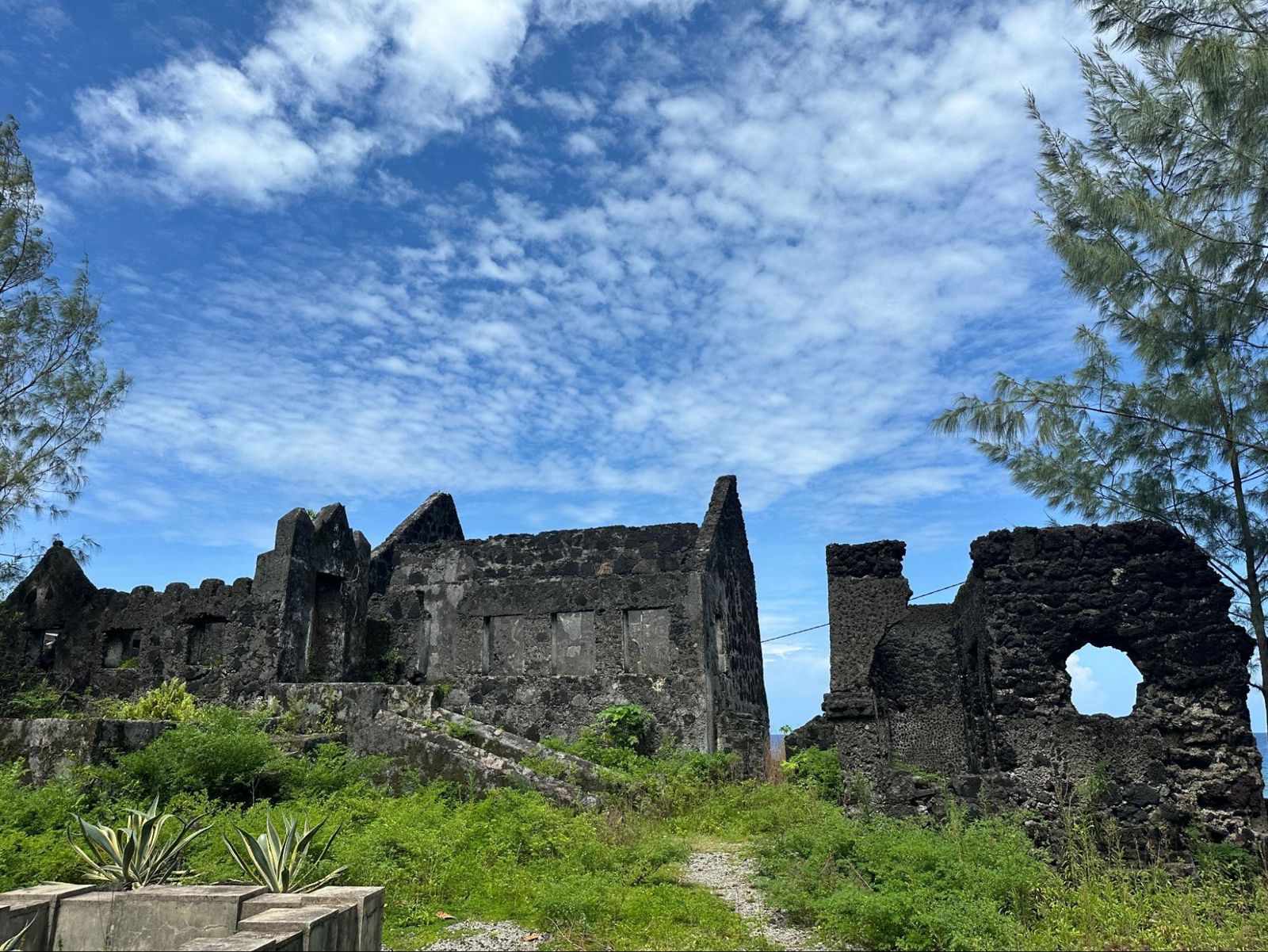
Running Along the Coast: The next morning, I decided to continue my tradition of going for a run in every new country I visit. I headed south along the coastline toward a fishing village that was home to an old palace associated with one of the island's historical sultanates.
The building was in pretty bad shape, but you could still make out parts of the architecture and imagine what it must have looked like during its prime. I found it fascinating that a place with so much history was sitting in such a modest setting, surrounded by everyday village life. There were no elaborate visitor facilities or crowds, just a historic structure that had clearly seen better days.
The run also gave me a chance to observe the local fishing communities and enjoy the coastline before heading back to the hotel. It's one of the reasons I enjoy running when I travel. You end up exploring neighborhoods and seeing things that you might otherwise miss.
Exploring Grande Comore: Once Nawad arrived with our driver, we headed north along the western coast of Grande Comore. The landscape was beautiful, with volcanic rock formations, green hills, villages, and stretches of coastline that were almost completely undeveloped.
We stopped at several beaches, and I was surprised by how few tourists were around. There were beautiful stretches of sand and ocean, but few of the hotels, restaurants, or other facilities you would expect to find in more developed beach destinations.
As we continued driving, Nawad explained more about the island's history and geography. Grande Comore is dominated by Mount Karthala, an active volcano that has shaped much of the island. Even though I wasn't able to hike the volcano on this trip, the volcanic landscape was visible throughout our drive.
The contrast between the dark volcanic rocks, green vegetation, and blue ocean was incredible. I had seen volcanic islands before, but Comoros had a very different feel, partly because so much of the coastline remained undeveloped.
The Legend of Lac Salé: Nawad had told me about Lac Salé, a lake near the northern end of Grande Comore that is surrounded by local stories and superstitions. According to one legend, if you throw a stone into the lake, you won't hear it hit the water. There are also stories warning people against swimming in it.
Now, I have to admit, I was intrigued. I always enjoy hearing these kinds of local stories because they offer a fun way to learn about the beliefs and traditions of a place.
When we finally arrived, I decided I wanted to test the legend myself. So I picked up a rock, stood near the edge, and threw it as far as I could. And BAM! I heard it hit the water! I was so excited that I had apparently beaten the legend, although in retrospect I think I was taking the whole thing a little too seriously!
Bats and the Dragon's Back: As we continued exploring, Nawad introduced me to more of the island's wildlife and natural attractions. One of the coolest things I saw was an enormous fruit bat. I learned about the Livingstone's fruit bat, also known as the Comoro flying fox, which is one of the largest bats in the world, with a wingspan approaching five feet! The species is found on the islands of Anjouan and Mohéli and is one of the most remarkable animals native to the archipelago.
But the highlight of the afternoon was visiting a coastal rock formation known as Dos du Dragon, or the Dragon's Back. Nawad had told me this was one of his favorite places on the island, and I could immediately see why.
The rock formations rise dramatically from the coastline, surrounded by green hills and the deep blue water of the Indian Ocean. We decided to hike up to get a better view, and I was absolutely blown away! The combination of volcanic rocks, ocean, and surrounding vegetation was unlike anything I had seen elsewhere in the region.
I spent some time walking around and taking in the scenery. There was hardly anyone around, and the views were absolutely incredible. I was so glad that Nawad had introduced me to a place I might never have discovered on my own.
More Legends and Local Food: As we continued our journey, Nawad told me about another local legend involving a mosque that was said to have appeared overnight in response to the wishes of the community.
I'm telling you, Comoros never ceased to amaze me! I love these kinds of stories, not because I necessarily believe them, but because they give you an idea of how people understand their history and traditions.
We eventually finished the day with a delicious meal of local fish. After spending so many hours exploring the island, it was exactly what I needed. Given the islands' history of Indian Ocean trade and French colonial influence, I wasn't surprised by the variety of food available.
I also learned more about lobster prepared with vanilla, known as langouste à la vanille, one of the country's best-known dishes. I wish I had more time to try additional traditional foods, but I was definitely happy with the seafood I managed to experience.
Moroni Through Nawad's Eyes: On my final day, I wanted to do something a little more personal. Rather than visit another major attraction, I asked Nawad to show me parts of Moroni that were meaningful to him and his family.
We walked through the old town, passing historic buildings, narrow streets, and neighborhoods connected to his childhood. I learned a lot about the city's past and the people who had lived there for generations. Nawad had spent years abroad, but he clearly had a strong connection to his roots and wanted to contribute to his country.
One of the most fascinating things he explained was the tradition of the Grand Marriage, known locally as Anda. In Comorian society, the Grand Marriage is much more than a wedding celebration. It can involve days of ceremonies, elaborate clothing, music, dancing, and enormous gatherings.
What surprised me was how closely the ceremony is tied to social standing and recognition within the community. From what Nawad explained, people may spend years, even decades, saving for the celebration, and completing it can have a major impact on their social position. Some celebrations can cost tens of thousands of dollars, a huge amount in a country where incomes are relatively low.
I had never encountered anything quite like it before. It was fascinating to hear Nawad explain how the tradition affects family life, community relationships, and social status.
AFTERWORD
The combination of African, Arab, and French influences made the Comoros Islands fascinating to explore. I loved visiting the old mosques, learning about local legends, seeing the volcanic landscapes, and trying the food.
But what really made the trip memorable was meeting Nawad. He went out of his way to introduce me to his country, and our conversations gave me a much deeper understanding of Comorian traditions and daily life.
I only explored Grande Comore, so there is still plenty I would love to see, especially the other islands. And who knows, maybe one day I'll return and actually attend a Grand Marriage!
TRAVEL TIPS
LAC SALÉ: Visit the lake if you're interested in local legends, but don't attempt to swim there. The steep sides and uncertain water conditions make it a place to observe rather than enter.
DOS DU DRAGON: This was one of my favorite places on Grande Comore. Wear proper walking shoes if you plan to hike up the rocks, and bring water since there aren't many facilities nearby.
LOCAL CUSTOMS: Comoros is a predominantly Muslim country. Dress respectfully, especially when visiting mosques and smaller communities, and ask permission before photographing people.
OTHER ISLANDS: If you have more time, consider visiting Mohéli or Anjouan. You'll need to organize inter-island transportation, and flight or boat schedules may be limited. I wasn't able to see them on this trip, but they would be high on my list for a return visit.
Stay Curious. And I look forward to seeing you on my next Final50 journey!
Travel Note: The information in this blog reflects my experience at the time of travel. Visa requirements, transportation, costs, and other travel conditions may change, so always verify the latest information before planning your trip.